
What Are The Main Uses of A Motor Grader in Road Construction?

Industry News

2026/05/28
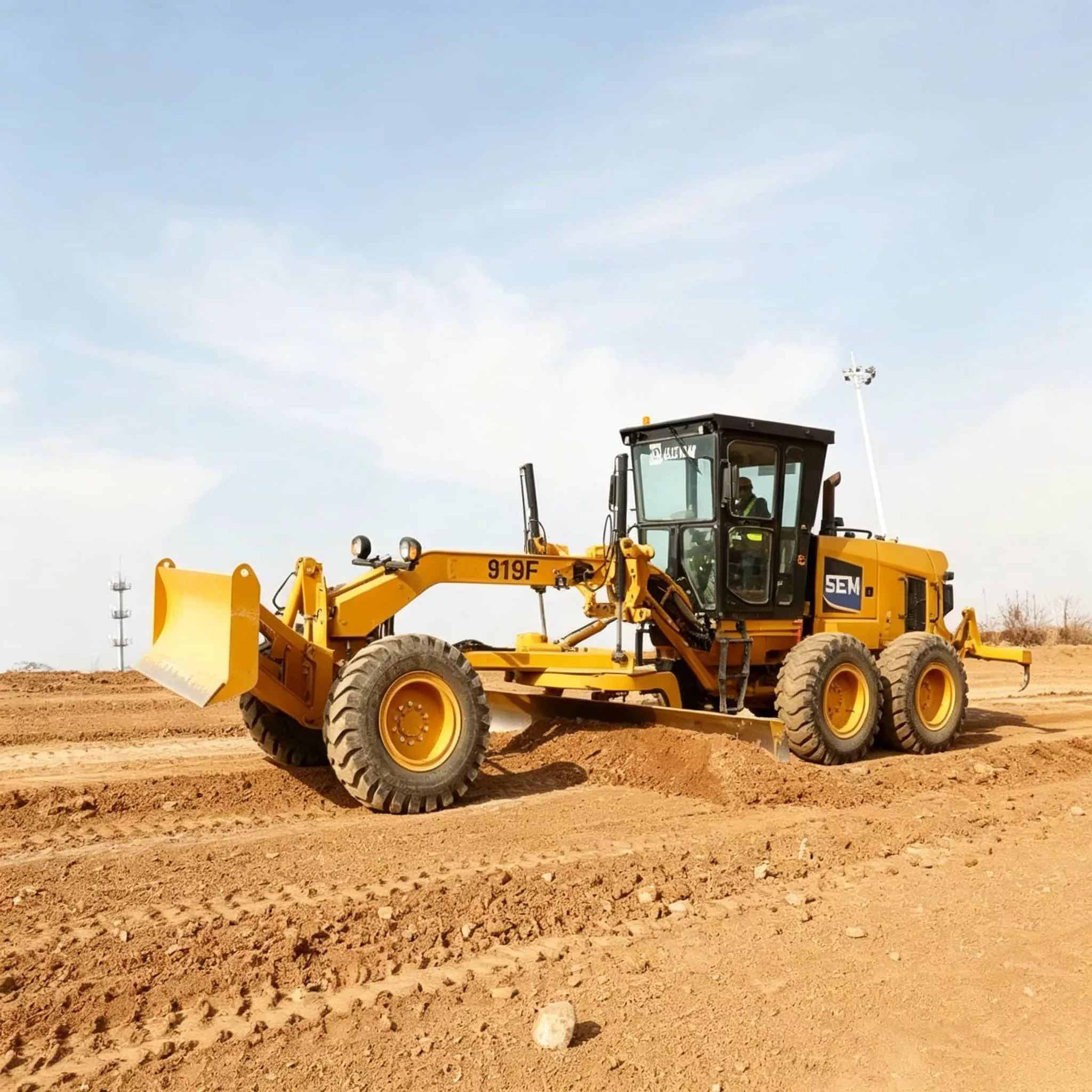 A flat road surface does not happen by accident. Crews need the right machine to cut, spread, and level dirt or gravel before asphalt goes down. That machine is the motor grader. Contractors call it the “road grader” or just “grader.” It looks simple, but it handles many jobs on a job site. This guide breaks down what a motor grader does, why it matters, and how to pick one that fits your project.
What Is a Motor Grader?
A motor grader is a heavy machine with a long blade between the front and rear axles. The blade tilts, lifts, and angles so the operator can push material side to side or shave layers off the ground. Most graders run on rubber tires, which lets them move fast between work zones. The cab sits high, so the driver sees the whole surface.
The blade is the star of the show. It is called the moldboard. Operators use it to cut ditches, slope banks, and fine-grade surfaces. Some graders also carry a ripper on the back. The ripper breaks up hard soil or old pavement before the blade moves the loose material.
Key Jobs a Motor Grader Handles
1. Rough Grading and Site Prep
Before any road takes shape, the ground must be close to level. A motor grader pushes dirt and rock to fill low spots and shave down high spots. This rough grading sets the stage for compaction and paving. Without it, the final surface cracks or sinks later.
2. Fine Grading for Precision
After the rough work, crews need a smooth base. The grader makes small cuts, sometimes less than an inch deep. This fine grading is key for airport runways, highways, and parking lots. The surface must stay within tight tolerance so asphalt or concrete sits evenly.
3. Building Road Shoulders and Ditches
Water ruins roads. Graders cut ditches along the edge so rain drains away. They also shape shoulders so the road slopes slightly outward. This crown helps water run off instead of pooling on the surface.
4. Spreading and Mixing Material
Graders do not just cut. They also spread gravel, crushed stone, or recycled asphalt. The blade pushes material across the width of the road. Some crews use the grader to mix stabilizers into the soil, which makes the base stronger.
5. Snow Removal and Maintenance
In cold climates, motor graders clear snow from rural roads and highways. The blade pushes snow to the side or into windrows. Many towns keep graders on standby during winter storms because they cover large areas faster than small plows.
6. Ripping Hard Ground
The rear ripper tears up compacted soil, old blacktop, or frozen ground. Once the material loosens, the moldboard moves it away. This saves time when excavators or dozers are not on site.
 Why Motor Graders Matter on the Job Site
 Why Motor Graders Matter on the Job Site
Speed and reach set graders apart from other machines. A dozer can push dirt, but it moves slower and lacks the fine control of a grader blade. An excavator digs well, yet it cannot level a long stretch of road quickly. The grader fills the gap between heavy earthmoving and final surface prep.
Tire graders also travel at road speed. They move from one end of a project to the other without a lowboy trailer. This cuts downtime and fuel cost. For long roads or multiple small jobs in one day, that mobility is a big win.
Another plus is blade versatility. The moldboard angles left or right, tilts forward or back, and shifts sideways. One machine can cut a ditch, then level a parking lot, then shape a slope. That flexibility means fewer machines on site and lower rental bills.
How to Choose the Right Motor Grader
Size and Horsepower
Small graders run around 100 horsepower. They fit tight urban streets and small lots. Large graders push 500 horsepower or more. They handle wide highways and heavy cuts. Match the machine to the job size. Too small and the work drags. Too big and you waste fuel and money.
Blade Width
Standard moldboards range from 12 to 16 feet. Wider blades cover more ground per pass. Narrow blades fit tight spaces and detail work. Some models offer extendable blades for extra reach.
Cab and Controls
Modern graders come with joysticks, GPS grading systems, and air-conditioned cabs. GPS auto-guidance keeps the blade at exact grade without stakes or string lines. This speeds up work and cuts labor cost. If your project demands tight tolerance, look for a machine with factory GPS or a ready mount for aftermarket systems.
Tires vs. Tracks
Most graders use tires. Tires give speed and a smooth ride on hard surfaces. A few models run on tracks for soft or muddy ground. Track graders are rare, but they matter in swampy areas or loose sand.
Attachment Options
Check if the grader can carry a ripper, snow wing, or dozer blade. These add-ons turn one machine into a year-round tool. A rear ripper is common on mid-size and large units. Snow wings bolt to the side for winter work.
Meet MachPlaza — Your Source for Road Construction Equipment
Finding a reliable motor grader at a fair price takes time. MachPlaza makes it simple. We list new and used graders from top brands like XCMG, Zoomlion, SANY, Shantui, Liugong, and SEM. Every unit ships with clear specs and photos so you know what you get before you buy.
Our team knows road construction. We can match you to the right horsepower, blade width, and attachment package. Need a 140-horsepower unit for county roads? We have it. Want a 300-horsepower machine with GPS for highway work? We can source that too.
MachPlaza ships worldwide. We handle export docs, container loading, and inland transport. You focus on the job site. We handle the logistics.
One More Thing
A motor grader is not just a “nice to have” on a road job. It is the machine that turns rough ground into a road. From first cut to final grade, the grader shapes the surface that every other layer sits on. Pick the right size, keep the blade sharp, and train your operator well. The result is a road that lasts.
FAQs
How long does a motor grader last?
Most graders run 10 to 15 years with regular care. Some units hit 20 years in light-duty fleets.
What is the difference between a motor grader and a bulldozer?
A dozer pushes material with a front blade. A grader uses a mid-mounted moldboard for fine leveling and shaping. Graders move faster and handle precision work better.
Can a motor grader remove old asphalt?
Yes, if it has a rear ripper. The ripper breaks the old pavement, then the blade pushes it aside. For thick slabs, a cold planer or excavator may work faster.
What blade size do I need for a highway project?
A 14-foot or 16-foot moldboard covers wide lanes in fewer passes. Most highway crews prefer 200 horsepower or more for this work.
Do motor graders work in snow?
Yes. Many towns and counties use graders with snow wings or V-plows for rural road clearing. The high cab gives the driver good visibility over drifts.
Is GPS grading worth the cost?
For large or precision jobs, yes. GPS cuts staking labor and keeps grade within tenths of an inch. It pays for itself on long roads or airport work.
What brands make the best motor graders?
Caterpillar and John Deere are popular in North America. XCMG, SANY, Zoomlion, Shantui, Liugong, and SEM offer strong value and global parts support. MachPlaza stocks most of these brands.
