
Tractor Truck Basics for Better Fleet Decisions

Industry News

2026/05/07

Tractor trucks sit at the center of freight movement. They pull semi-trailers, move containers between terminals, and handle heavy loads that ordinary rigid trucks cannot take on. In practical terms, the tractor is the powered unit with the engine, cab, drivetrain, and fifth wheel, while the trailer carries the cargo. That split matters because it gives operators flexibility: one tractor can work with different trailers across different jobs. U.S. highway classification guidance also treats the truck tractor as a distinct vehicle type within freight transport.
For buyers, the real question is not just what a tractor truck is. It is which type fits the route, payload, trailer, and duty cycle. On MachPlaza’s commercial vehicle platform, tractor truck listings span light industrial towing units through heavier road-going configurations, with product filters built around drive type, stock status, and weight data such as kerb weight and GVW. That mix reflects how broad the category really is.
What makes a tractor truck different?
The basic idea is simple. A tractor truck is built to tow rather than carry the main load on its own chassis. The fifth wheel couples to the trailer kingpin, creating the pivot point that lets the combination turn, reverse, and run at highway speed with stability. Common road tractors add sleeper or day cab layouts, air brake systems, reinforced frames, and driveline options matched to weight and terrain.
That difference changes how fleets use the vehicle. A straight truck is a single unit with cargo mounted on the same chassis. A tractor truck is the pulling unit in a modular setup. For long-haul freight, container work, or high-volume regional transport, that modular setup is usually the reason companies choose it.
Tractor truck vs semi truck?
In everyday English, the two terms often overlap. “Semi truck” usually refers to the tractor, or sometimes the full tractor-and-trailer combination. “Tractor truck” is more precise because it points to the towing unit itself. For a buyer comparing equipment, it helps to keep the wording clear:
| Term | Usual meaning | Best use |
| Tractor truck | The powered towing unit | Specs, procurement, fleet planning |
| Semi truck | Often the tractor, sometimes the whole rig | General conversation, broad search intent |
| Tractor-trailer | Tractor plus trailer | Operations, transport planning |
This matters in search as well as in procurement. Buyers may start with “semi truck,” then move into more exact queries such as tractor truck specifications, towing capacity, or 6×4 tractor truck once the shortlist starts to take shape.
Main types of tractor truck
The market is wide, and buyers usually narrow it by operating scene first.
A warehouse tractor used for moving trailers around a yard has very different priorities from a road tractor running hundreds of kilometers with a loaded semi-trailer. MachPlaza’s current tractor truck range reflects that spread, from compact towing units in lower GVW bands to larger 4×2 and 6×4 road configurations.
Yard and terminal tractor trucks
These are built for short-distance trailer movement in ports, depots, industrial parks, and factory compounds. Tight turning radius, easy cab access, responsive steering, and stop-start durability matter more than highway speed. Product descriptions on MachPlaza’s tractor truck repeatedly emphasizes maneuverability, driver comfort, braking confidence, and service-friendly driveline layouts, which are exactly the traits buyers look for in these settings.
Regional tractor trucks
Regional units cover medium-distance routes linking factories, warehouses, and distribution centers. They often need a balance between payload capacity, fuel use, and cab comfort. For this class, operators tend to look at axle layout, gross combination weight needs, and how often the truck will run loaded versus empty.
Long-haul tractor trucks
Long-haul work places the most pressure on engine output, aerodynamics, brake durability, driveline strength, and driver fatigue control. Industry buying guides consistently put powertrain choice, suspension, and maintenance planning near the top for this category, because downtime costs rise quickly once routes become longer and schedules tighter.
Key tractor truck specifications to check
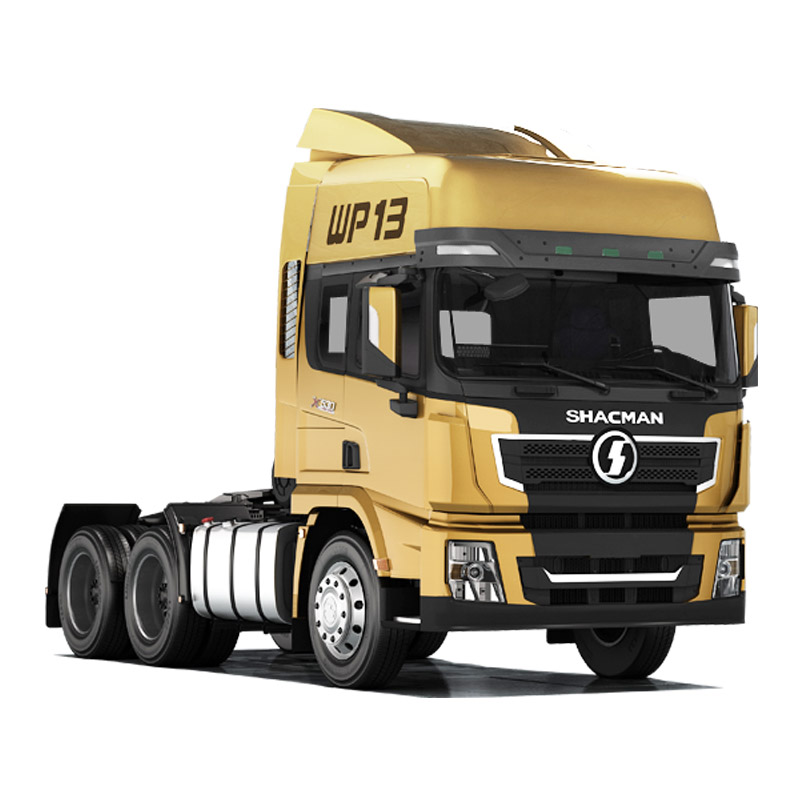
Before comparing prices, it helps to read the specification sheet in the right order. Buyers often focus on horsepower first, but that is only one piece of the puzzle.
Power, torque, and transmission
Engine output affects how well a tractor truck can pull on gradients, accelerate with load, and hold speed over distance. Torque matters just as much as horsepower for heavy starts and low-speed pulling. Transmission choice also changes the daily feel of the truck, especially in stop-start operations or mixed terrain.
Drive type and axle layout
Driver type is one of the key parameters that most professional products focus on first.. Typical layouts include 4×2 for lighter highway work and 6×4 for heavier applications or tougher road conditions. On MachPlaza’s tractor truck listings, 4×2 and 6×4 appear as practical sorting points rather than technical details buried in the fine print, which is useful for buyers comparing route demands.
Kerb weight, GVW, and towing capacity
These numbers shape what the truck can legally and efficiently do. A lighter tractor can improve payload economics in some routes. A heavier setup may bring more durability or traction. MachPlaza offers a wide range of vehicles in various weights and GVW values, a valuable feature that allows buyers to easily find the right vehicle for them without the hassle of searching.
Cab design, brakes, and serviceability
Long days on the road turn cab comfort into an operating cost issue, not a luxury item. Seat support, control layout, visibility, and cabin access all affect fatigue. Braking and steering response matter just as much in yards, slopes, and mixed traffic. Several listed tractor truck products on MachPlaza highlight sensitive steering, reliable braking, compact structure, and easier control as working advantages rather than showroom features.
| Specification area | Why it matters | Best questions to ask |
| Engine and torque | Pulling power and gradeability | What load and route is this truck built for? |
| Axle layout | Traction, weight handling, road fit | Is 4×2 enough, or is 6×4 the safer choice? |
| Kerb weight / GVW | Payload math and compliance | Does the weight spec fit the trailer plan? |
| Cab and controls | Driver fatigue and daily output | Will this layout suit long shifts? |
| Brake and steering system | Safety and handling | How will it perform in traffic or terminals? |
How to choose the right tractor truck?

A good buying process starts with route reality, not brochure language. Operators should map a normal week: distance, stops, load type, yard time, gradients, and idle hours. That often reveals whether the truck needs to prioritize highway efficiency, low-speed maneuverability, or mixed-duty resilience.
The next step is to look beyond purchase price. Maintenance articles and buying guides in this segment repeatedly stress uptime, service access, scheduled inspection, and wear points such as tires, couplings, brakes, and filters. Even simple preventive routines have a direct effect on fleet availability and operating cost.
A practical shortlist for buyers
- Match the tractor to the trailer first
- Check weight figures before power claims
- Compare drive layouts against real road conditions
- Review service access and parts support
- Consider driver comfort for long shifts
- Ask how the truck will fit future fleet growth
MachPlaza as a tractor truck supplier
For buyers sourcing from China, MachPlaza operates as a one-stop equipment platform with a broad commercial vehicle lineup and a wider machinery network built over roughly two decades in the industry. The platform presents tractor trucks alongside semi-trailers and other transport equipment, with category filters, inquiry paths, and specification-led product organization that make early comparison easier. Company information and current tractor truck content also point to export capability, equipment matching support, quality checks, and after-sales coordination, which are the points most international buyers typically need before moving from browsing to RFQ.
Conclusion
A tractor truck is more than a strong pull unit. It is a plan choice that touches trailer options, path savings, upkeep pace, driver load, and full haul cost. The correct pick relies less on big power stats and more on match. Match to the cargo. Match to the trailer. Match to the path. Match to the work loop. When these align, a tractor truck turns into a top tool in an active fleet.
FAQs
What is a tractor truck used for?
A tractor truck pulls semi-trailers, containers, and other big loads in freight, shipping, work yards, ports, and local send-outs. The role varies by setup for yard work, mid-range hauls, or far-road jobs.
What is the difference between a tractor truck and a trailer?
A tractor truck is the front powered part with the engine, cab, drivetrain, and fifth wheel. The trailer is the back cargo part that connects to it. Together, they make a tractor-trailer pair.
How do you choose the best tractor truck for business?
The best tractor truck fits the trailer kind, total load, path setup, miles, and upkeep plan. Shoppers should check axle plans, powertrain, weight stats, brake system, and easy fixes before price alone.
Which tractor truck specifications matter most?
Top tractor truck specs often cover engine strength, torque, drive type, curb weight, GVW, cab style, and brake setup. These shape pull work, rule fit, ease, and daily costs.
Where can buyers find a tractor truck for sale?
Shoppers start on focused vehicle sites. These offer clear groups, weight info, drive filters, and query help. This aids matching tractor truck choices to real haul needs before quote asks.
