
Flat Top, Luffing Jib or Hammerhead Crane

Industry News

2026/05/14
Picking a tower crane is seldom an easy task. It goes beyond just load strength. A crane that seems powerful on specs might still delay the work. This happens if the jib does not fit the site setup. Or if the turning circle clashes with close structures. Or if the setup plan demands more area than the site offers.
Flat top tower cranes, luffing jib tower cranes, and hammerhead tower cranes are three usual options for tall buildings, home areas, business centers, bridge jobs, and busy city work. They all raise heavy items off the ground. But they act quite differently on an actual site.
A builder on an open suburb home project might want far reach and basic daily use. A developer raising a structure between two old towers might focus on air space limits. A team doing precast work might stress on end load, hook speed, and many lift cycles. The best pick depends on the site conditions. It does not rely on the crane’s name.
Quick Comparison of the Three Tower Crane Types
Before we dive into each type, it pays to compare them. We can look at key factors that impact site output. These include working radius, load strength, setup area, air space handling, and job kind.
| Factor | Flat Top Tower Crane | Luffing Jib Tower Crane | Hammerhead Tower Crane |
| Jib design | Horizontal jib without a high tower head | Angled jib that can move up and down | Horizontal jib with a tower head |
| Best use | Multi-crane sites, high-rise projects, precast work | Tight urban sites, restricted airspace, dense construction | Open sites, standard building work, general construction |
| Space control | Good | Very strong | Moderate |
| Setup complexity | Usually easier than traditional top-head designs | More complex | Familiar and widely used |
| Cost level | Medium to high | Usually higher | Often more budget-friendly |
| Typical strength | Good balance of reach, load, and site flexibility | Excellent when swing space is limited | Reliable for simple, open lifting paths |
This table does not take the place of a load chart or site lift plan. It just points out the first question for a buyer. What issue does the crane need to fix each day on site?
What Is a Flat Top Tower Crane?
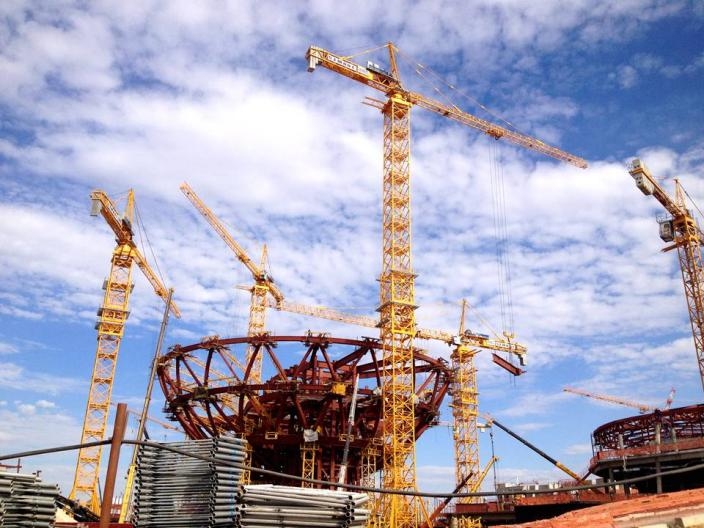
A flat top tower crane, also known as a topless tower crane, features a level jib. But it lacks a tall tower head over it. This shorter top part makes it handy when multiple cranes work near each other. Or when overhead room is tight.
On a tall home project with four or five buildings going up together, crane overlap can cause daily issues. The short head style of a flat top tower crane cuts down on clashes between cranes. It also lets the lift team plan safe work areas with more ease. Plus, it is simpler to move and put together in many situations. That is because there are fewer top parts to handle.
Where Flat Top Cranes Work Well
A flat top tower crane fits well when the job requires:
- Multiple tower cranes operating on one jobsite
- Long jib reach for wide building footprints
- Repeated lifting of rebar, formwork, steel sections, or precast components
- Easier assembly and dismantling than traditional top-head designs
- Good tip load at longer working radius
For instance, a builder dealing with precast panels on a medium-height job might not need the top max lift power. What counts more is if the crane can raise the panel at the needed distance over and over. It should do so without holding up the concrete work.
The key limit is that flat top cranes use a level jib. So, if the site has old buildings around it, public streets, power wires, or tight air space, the crane might still take up too much turn room.
What Is a Luffing Jib Tower Crane?
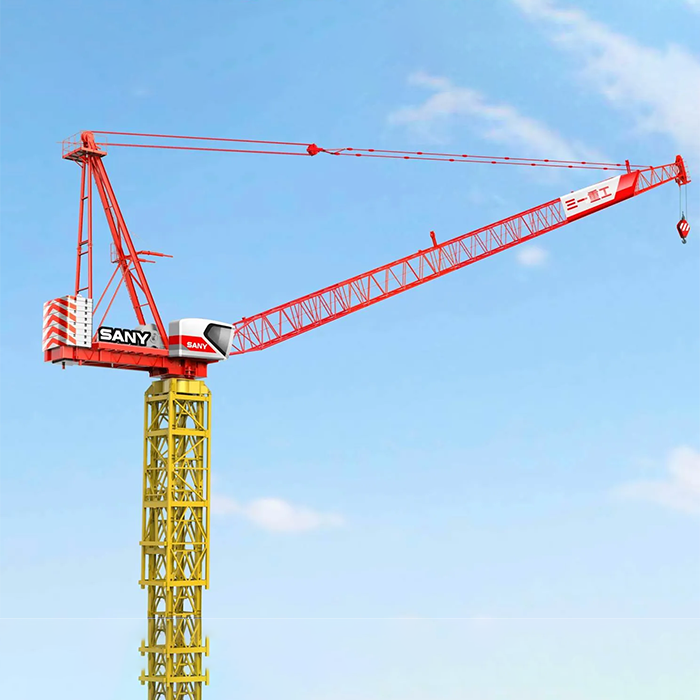
A luffing jib tower crane has a jib that can go up and down. The operator does not keep a long level jib in the air all the time. Instead, they can change the jib angle to shrink the work radius. This one change in design makes the luffing jib tower crane a top pick for cramped city builds.
Think of a project in the city center. The building base is between a crowded street, an old office tower, and a slim access path. A normal level jib might go over spots the builder cannot touch. But a luffing jib crane can fit in a smaller air area. Thus, it works well for limited sites.
Where Luffing Jib Cranes Work Well
A luffing jib tower crane is picked often for:
- High-rise buildings in dense city districts
- Sites with strict oversailing limits
- Projects beside roads, railways, schools, hospitals, or occupied buildings
- Multi-crane sites where swing radius must be tightly controlled
- Heavy lifting at shorter working radii
The downside is price and setup needs. Luffing jib cranes often call for more careful planning. They need skilled operators. And they require good teamwork during build-up and take-down. The lift cycle might run slower for some repeat jobs, based on the task.
Yet, when space is the big issue, the added cost might make sense. It could beat changing the whole lift plan.
What Is a Hammerhead Tower Crane?
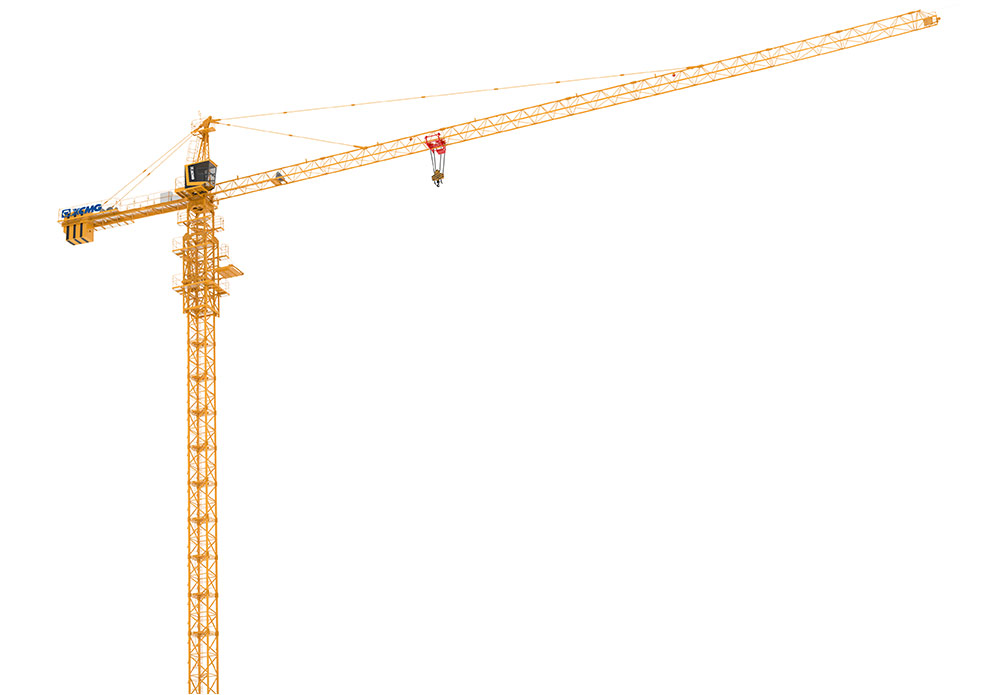
A hammerhead tower crane is the classic type many think of first. It has a straight tower, a level jib, a counter-jib, and a trolley that slides along the jib. People use it a lot because the build is known. The lift path is clear to see. And it does well on open build sites.
On a big home growth area away from the city hub, a hammerhead tower crane can be a smart and cheap choice. It provides far level reach. It offers steady lift action. And it gives plain operation for usual items like rebar frames, concrete pails, formwork, blocks, and build steel.
Where Hammerhead Cranes Work Well
A hammerhead tower crane suits:
- Open jobsites with few airspace restrictions
- Residential towers and commercial buildings
- General concrete and steel lifting
- Projects where the crane can swing freely
- Buyers looking for a familiar and cost-effective tower crane
The chief flaw is its demand for turn space. Since the jib stays level, site planners must review nearby structures, streets, site edges, and other cranes. If the crane cannot turn safely in its work zone, another type might suit better.
How to Choose the Right Tower Crane for Your Jobsite
A good tower crane pick begins with the site. It does not start with the product list. The same crane can work fine on one job. But it might fail on another.
Check the Working Radius First
Working radius means the distance from the crane base to the load. It affects all aspects. A tower crane might hold a high max load near the mast. But that drops as the load goes out along the jib.
For buyers, end load often matters more than the main lift strength. If the heaviest items need to go up near the jib’s tip on a long arm, pick the crane for that distance. Do not choose just for max load at close range.
A basic site review should cover:
- The farthest picking point
- The farthest placing point
- The weight of the heaviest load at each point
- The height of the building at each stage
- The location of storage zones and truck unloading areas
A crane with solid reach but poor end load can cause delays. Items might move twice. Trucks might wait extra time. And workers might lose work hours.
Look at the Airspace Around the Crane
Air space often counts more than ground area. A site might have space for the mast and base. But not enough for the jib to turn without issue.
In a packed city area, a luffing jib tower crane can cut oversail risks. On a broad site with many cranes, flat top tower cranes can lower clashes between parts. On open land, a hammerhead crane might do just fine.
The best plan starts with a site sketch. Mark structures, streets, power lines, nearby land, and crane turn zones. Do not guess here. It costs too much.
Match the Crane to the Construction Method
Build methods lead to different lift needs.
In cast-in-place concrete, the crane might move formwork, rebar, concrete pails, and tools all day. In precast work, it might raise heavy panels at fixed times. There is less margin for mistakes. In steel builds, load weight and distance can shift a lot from phase to phase.
A flat top tower crane often appeals for precast and module jobs. It blends far reach with good site fit. A luffing jib crane suits better when those items go up in a tight city bound. A hammerhead crane stays a solid pick when the site is open. And the lift path is straightforward.
Common Jobsite Scenarios
Many sites share common setups. Here are some examples to guide your choice.
Dense Urban High-Rise
A luffing jib tower crane is often the top type to check. Its movable jib helps shrink the turn radius. It keeps lifts in a smaller air zone. This counts when close buildings, public streets, or land lines allow little room for slips.
Large Open Residential Project
A hammerhead tower crane can fit well when there is room to turn. It brings easy use, known build, and solid daily output for basic build tasks.
Multi-Tower Development
A flat top tower crane can aid when many cranes work nearby. The shorter top build aids safe team work. It can cut issues in shared work zones.
Precast or Modular Construction
Flat top and luffing jib cranes both deserve a look. The right one hinges on distance, panel weight, store spots, and air limits. The main number is not just max lift power. It is also end load at the needed work distance.
Brief Introduction to MachPlaza as a Tower Crane Supplier
MachPlaza provides Chinese build gear for buyers worldwide. It covers full units, spare parts, and gear aid for projects. The lineup includes cranes, excavators, loaders, road tools, piling gear, concrete tools, forklifts, high work gear, mine tools, special trucks, and add-ons.
For tower crane buyers, the strength is in the range and buy help. The tower crane group has flat top tower cranes, luffing jib tower cranes, and hammerhead tower cranes. Capacities go from small and medium build needs to heavy lift tasks. Buyers can check work range, tip load, lift strength, free height, and unit state before asking.
The firm also stresses full life aid. This includes pre-sales, sales, after-sales, parts, shipping help, and project fixes. That helps overseas buyers. A tower crane buy does not end at the plant. Shipping, papers, parts, setup plans, and long aid all shape the true own cost.
Conclusion
Flat top, luffing jib, and hammerhead tower cranes each have a firm role in builds. A flat top tower crane suits multi-crane sites, tall work, and jobs needing better top part team-up. A luffing jib tower crane fits dense city sites with tight air space. A hammerhead tower crane is a real choice for open sites with basic lift paths and cost-watch plans.
The top tower crane for a site matches the lift distance, load weight, site bounds, build height, and build way. Before seeking a tower crane price, buyers should gather key job info. This includes max load, farthest work distance, needed hook height, site plan, power setup, use country, and delivery time hopes. With that, the pick gets much sharper.
FAQs
What is the main difference between a flat top tower crane and a hammerhead tower crane?
A flat top tower crane lacks a tall tower head over the jib. A hammerhead tower crane uses a classic tower head build. Flat top cranes often suit multi-crane sites and tight overhead room. Hammerhead cranes see common use on open sites where the jib can turn free.
Is a luffing jib tower crane better for urban construction?
Yes, a luffing jib tower crane often suits tight city builds better. Its jib can rise and fall. This cuts the work radius. It limits oversail near streets, close buildings, and bound land lines.
Which tower crane type is best for high-rise construction?
For high-rise builds, flat top and luffing jib tower cranes are usual picks. A flat top crane fits when many cranes run on one site. A luffing jib crane suits better in packed city spots with limited air space.
How should buyers compare tower crane lifting capacity?
Buyers should check max lift strength, work radius, tip load, free height, and jib length as a set. Max lift strength alone can mislead. The crane might hold far less at the jib end than near the mast.
Where can buyers find tower cranes for sale?
Buyers can check tower cranes for sale via MachPlaza. They can compare types based on lift strength, work range, tip load, free height, and job needs. A clear site plan and load list will help the seller suggest a better fit tower crane.
