
Single Cage vs Double Cage Construction Hoist — Which Configuration Pays Off?

Industry News

2026/11/05
One cage moves one load. Two cages can move loads both ways at once. That simple change shifts how fast your site runs.
The right setup depends on project size, floor count, material volume, and cash. A single cage construction hoist fits many smaller jobs. A double cage construction hoist wins on bigger sites where cages run all day.
This guide compares the two configurations. It covers output, cost, installation layout, and maintenance. Use it before you sign a rental order or buy a unit.
What Is the Core Difference
A single cage hoist runs one car up and down a mast. When the cage loads on the 20th floor, nobody can ride down. The cycle stops until the cage clears, unloads, and returns.
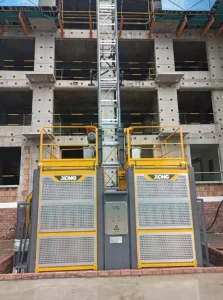
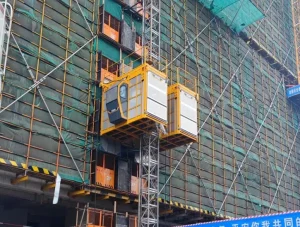
A double cage hoist runs two cars past each other on the same mast. One car goes up with material. The other comes down with workers or empty. Both ends of the loop stay busy.
That is the whole value. The double cage cuts waiting time in two places at once. The cage that empties on a lower floor does not block the cage that fills on an upper one. In a busy structure phase, that difference shows up as more rebar, block, and dry mix landing per hour.
It also changes the layout you plan on site:
- Wider foundation slab
- Two opening doors instead of one
- Bigger wall anchor spacing
- Heavier standard section load
- More installation crew hours
The double cage also costs more to buy and install. The question is whether that extra money pays back in saved work days.
When Each Configuration Fits Best
Small and Medium Projects
A single cage construction hoist usually fits buildings up to about 12–18 floors with normal material flow. One cage at 3,000 kg or 5,000 kg covers the daily load. If crews work in one main phase, a single cage rarely becomes the bottleneck.
Single cage makes sense when:
- Floor count is under 18 and material volume is normal
- The site has one clear opening side
- Budget for installation is tight
- The project runs one main construction phase at a time
Large and High Projects
Double cage makes sense when:
- The building is 20 floors or higher
- Daily material flow is heavy (rebar, masonry, dry mix)
- The schedule has little slack
- Crews want workers going up while material comes down
One rule of thumb: if the hoist is the slowest step on your site, you already need the faster config.
Which One Pays Back Faster
Double cage costs more on paper. The payback comes from the schedule.
| Cost item | Single cage | Double cage |
|---|---|---|
| Machine price | Baseline | Usually 15–30% higher |
| Foundation slab | Small, one opening | Wider, two openings |
| Installation days | Shorter | Longer, more crew hours |
| Daily transport | One direction at a time | Both directions at once |
| Waiting time on site | Higher | Much lower |
| Removal and transport | Cheaper | More sections to move |
The real number to compare is cage-hour cost per floor finished. A double cage can finish the same floors in fewer working weeks. On a schedule with liquidated damages, one saved week can cover the price gap. On a small job with no time pressure, the extra cost never comes back.
Before you decide, run one simple test. Count how many cage trips you need per day in each direction. If one cage cannot cover both directions without idle waiting, the double cage pays back. If one cage sits half the day anyway, stay single.
Installation and Layout Notes
Double cage changes the layout plan. The source experience is clear: plan the position before the foundation slab is poured.
Check these points on both configs, but double cage needs more care:
- Opening size on each floor must clear both doors and wall anchors
- Wall anchors need a shear wall or beam plane, not a soffit or ledge that blocks the frame
- The gap between cage and wall must stay inside the manual limits
- Tower crane jib clearance during demolition must clear the mast by a safe margin
- Backfill soil near the base needs compaction proof or a reinforced raft
- Climbing frame and suspended scaffold work above the hoist must not block mast climbing
Two openings mean two over-bridge points. Each needs its own safe walkway and rail. A small layout mistake found at anchor time can cost a full week of rework.
Safety and Maintenance
More cages mean more moving parts. The maintenance plan must scale with the config.
Both cages need the same core checks:
- Limit switches and door interlocks tested daily
- Anti-fall device service within the certified window
- Wire rope or chain wear measured per the manual
- Standard section bolts torqued at each climb
- Base slab drainage kept clear
Double cage adds one more failure mode: cage-to-cage spacing. The anti-collision logic and spacing sensors must stay working, and the operator must be trained on two-car sequences. Plan spare parts for the doubled set of doors, limit switches, and cage lights. On a site with two crews, each cage needs its own daily checklist so nobody assumes the other side covered a check.
A single cage has fewer parts and simpler checks, which is why some contractors prefer it for short jobs. If you run double cage, keep the service log split by car. That makes it easy to spot one cage wearing out faster than the other.
Work With MachPlaza
Send these items for a matched quote:
- Building height, floor count, and material plan
- Single cage or double cage requirement
- Target market for service and parts
- New or used budget range
We will point out if a single cage covers your job and save you money. No pressure, no upsell.
For used units, we also check cage hours, wire rope condition, anti-fall device service records, and whether the mast was ever bent or overloaded. The quote comes with the data sheet, so you can compare cage size, speed, and lifting height side by side. If your project changes midway, we will say whether the same unit still fits or a second one makes sense.
[Internal Link: construction elevator for sale]
The Bottom Line
Single cage keeps cost low and layout simple. Double cage buys back schedule with two cars running at once. Pick the config from daily transport volume and floor count, not from habit.
Run the trip-count test. If one cage cannot cover both directions without idle waiting, the double cage pays back. If the cage sits half the day anyway, stay single.
One more thing: confirm the opening size and anchor points before the slab is poured. A layout error found at anchor time costs a week of rework. Plan the removal date into the config choice too. A double cage takes longer to dismantle, so schedule the extra crew days before the finishing phase closes out.
The machine that fits the site is the one that earns its keep.
Single cage keeps cost low and layout simple. Double cage buys back schedule with two cars running at once. Pick the config from daily transport volume and floor count, not from habit.
Run the trip-count test. If one cage cannot cover both directions without idle waiting, the double cage pays back. If the cage sits half the day anyway, stay single. The machine that fits the site is the one that earns its keep.
FAQs
Q1: What is the main difference between the two configs?
One cage runs one way at a time. Two cages run up and down together, so waiting drops a lot.
Q2: Is a double cage worth it on a small building?
Usually not. Under about 18 floors with normal material flow, a single cage covers the job at lower cost.
Q3: How much more does a double cage cost?
Roughly 15–30% more for the machine, plus a wider slab and longer install. The schedule gain decides if it pays back.
Q4: Can I start with one cage and add a second later?
Some models allow it if the mast, anchors, and base were planned for two cars. Confirm with the maker before ordering.
Q5: Which is safer, single or double cage?
Both meet the same safety rules. Double cage adds spacing and anti-collision checks, so training and maintenance must cover them.
Q6: How fast do the cages run?
Common units run around 33 m/min. Faster types exist for taller towers. Check the data sheet for the exact model.
Q7: How many floors does one hoist serve?
Most units cover 100 m plus more with standard sections. Very tall projects use high-speed units or two hoists.
Q8: What load do I need?
3,000 kg covers most material work. 5,000 kg helps when one trip moves more rebar or dry mix per run.
Q9: What if my opening is narrow?
Check the door and wall anchor sizes against the drawing first. A tight opening can block anchors or the over-bridge walkway.
Q10: Where can I compare configs with a supplier?
Send your building data and daily transport plan to MachPlaza. We will quote both configs and show which one fits.
