
What Is a Backhoe Loader Used For? Top Applications & Best Attachments

Industry News

2026/10/29
A backhoe loader works with one machine on two ends. The front end loads. The rear end digs. That design cuts the time you spend moving between jobs.
Small crews use it for municipal work, farm tasks, and light excavation. Big projects still need dedicated diggers and loaders. The backhoe loader shines when job size stays moderate and site space is tight.
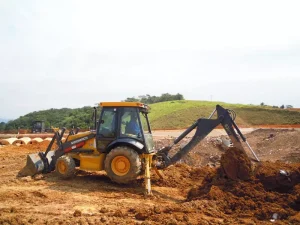
This guide covers the main uses, the best attachment setups, and how to pick the right unit.
Top Applications of a Backhoe Loader
Municipal and Utility Work
This is the biggest use area. The machine digs trenches for water, gas, and cable lines. Then it loads gravel or pipe back onto the truck. One crew, one machine, one day.
Common municipal tasks include:
- Trenching for water, sewage, and gas lines
- Digging fiber-optic and cable routes
- Repairing curbs, sidewalks, and small potholes
- Backfilling and compacting after pipe work
- Cleaning ditches and small drainage channels
Farm and Rural Sites
Farms run on a backhoe loader year-round. The front bucket moves feed, soil, and grain. The rear digs fence post holes and drainage ditches. The machine drives through gates and works between buildings.
Farm duties:
- Fence post and utility pole holes
- Drainage ditch digging and cleaning
- Manure and feed handling with the front bucket
- Silo pit cleanup and equipment pad work
- Hauling with a front-end loader or bucket attachments
Construction and Landscaping
On construction sites, the machine handles foundation edges, trench work around buildings, and site cleanup. Landscaping crews use it for grading, tree planting, and hardscape prep.
Key construction uses:
- Shallow foundation trenching and backfill
- Drainage systems around new buildings
- Site cleanup between trades
- Hauling soil, sand, and aggregate
- Trench work where a full excavator would not fit
Demolition and Cleanup
Small demolition tasks suit a backhoe loader. The rear digger pulls foundations, curbs, and slabs. The front end carries debris to the dump. Attachments extend the range of work.
Cleanup tasks:
- Concrete slab and curb demolition
- Debris loading and hauling
- Stump digging with an auger
- Brush and yard waste handling with a grapple
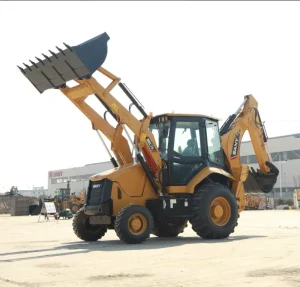
Best Backhoe Loader Attachments
Front Attachments
The front side is a standard loader mount. You can swap between several backhoe loader attachments in minutes.
- Bucket — the standard load and carry tool
- Pallet forks — for moving feed bales and palletized supplies
- Auger — for fence posts, fence rail holes, and planting
- Grapple — for brush, yard waste, and demolition debris
- Cold planer — for asphalt striping and surface prep
- Broom — for site and yard cleanup
- Snow plow — for winter maintenance
- Mixer bucket — for on-site concrete mixing
Rear Attachments
The rear boom takes its own set of tools. This is where the digging side gets flexible.
- Standard dig bucket — the default trench tool
- Breaker — for concrete and rock breaking
- Auger — for deeper post and hole work
- Grab bucket — for demolition sorting
- Trenching bucket — for clean, narrow utility cuts
- Concrete auger — for footing and pier drilling
Quick-Change Systems
Fast attachment swaps matter when one machine runs several tasks in a day. A quick coupler at the front and a quick-change mount at the rear can cut changeover from 20 minutes to 3.
Check the quick-change type before buying. Not every front coupler fits every rear tool. Match the coupler to the attachments you will actually use.
Which Jobs Should Use a Backhoe Loader
A backhoe loader fits jobs that stay inside its limits. Pick it for small to medium work that mixes digging and loading. Skip it when volume is heavy or depth is large.
Good fits:
- Utility trenching under 3 meters
- Municipal maintenance and repair
- Farm and ranch general work
- Small building site prep
- Drainage and landscaping
- Multi-task work where one machine covers several jobs
Better fits elsewhere:
- Deep foundation work — use an excavator
- Heavy aggregate hauling — use a wheel loader
- Big demolition — use a hydraulic breaker machine
- Long-run grading — use a dozer or grader
The simple rule: small to medium volume plus mixed tasks means a backhoe loader saves money. Big or deep jobs mean dedicated equipment runs faster.
Think in daily hours, not just per job. If the machine runs 6 or more hours a day, buy the heavier-duty setup. If it runs 2 hours a week, a lighter unit holds value better. The attachment plan should follow the same logic. Plan the coupler set around the top four or five tasks you actually run.
One more point: check the transfer case and tires before you commit. A four-wheel drive with the right tire size holds speed on farm tracks and keeps wear low on paved site moves. These two parts shape how the machine feels across the whole job list.
How to Choose the Right Backhoe Loader
Pick the Digging Specs
The rear end decides the trench work. Check three numbers:
- Maximum digging depth
- Maximum digging radius
- Bucket capacity on the rear
Match these to your deepest job. A machine that digs 2.5 meters deep cannot do 3.5-meter utility work.
Pick the Loading Specs
The front end decides the hauling work. Check:
- Front bucket capacity
- Lift height over the truck
- Rated load at full lift
If you load into a tipper, lift height matters more than raw load. A shorter arm drops material lower in the truck.
Pick the Drive and Control Type
Two drive layouts and two control types shape the work experience.
| Setup | Best For | Watch For |
|---|---|---|
| 4-wheel drive | Rough ground, farms, hills | Higher fuel use, costlier parts |
| 2-wheel drive | Paved sites, light utility | Less grip on soft soil |
| Joystick control | Precision digging, fast work | More hydraulic work, higher cost |
| Mechanical lever | Simple repair, tight budgets | Slower cycle, more fatigue |
A four-wheel drive with joysticks suits mixed rural and municipal work. A two-wheel drive with levers fits occasional light tasks where budget rules.
Check the Service Side
Parts and service decide downtime. A cheap machine can lose money when hydraulic parts are hard to find. Confirm:
- Local dealer or service point
- Common filter and hose availability
- Hydraulic and tire support
- Warranty terms for the undercarriage and rear boom
Work With MachPlaza
MachPlaza helps buyers match backhoe loader attachments and the base machine to the job. We compare brands such as XCMG, SANY, Zoomlion, and Shantui for utility, farm, and construction work. Every quote comes with a clear spec sheet and the attachment list you asked for.
Before you request a price, send these four items:
- Main job list and site type
- Deepest trench and heaviest daily load
- Preferred drive layout: 4WD or 2WD
- Target market for parts and service
Ask for the coupler type, service network, and a working video on every offer. MachPlaza can quote the full setup, base machine plus attachments, so you buy once and run the full task list. For used units, we also check hour readings, hose condition, and weld quality before you commit.
The team will point out if a lighter model covers your job and save you money. No pressure, no upsell.
The Bottom Line
Check the digging specs first. Then the loading specs. Then drive, control, and service. Buy the setup that matches the daily tasks, not the biggest spec sheet.
One last note: a well-run backhoe loader often pays for itself inside two or three seasons. Pair it with a clear attachment plan and a service point nearby, and the machine keeps working through the full job list. If your daily hours are low, start with a base setup and add attachments as the workload grows. That keeps the first-year cost in line with real work.
When you are ready, send the job list and digging specs to MachPlaza. We will point out if a lighter model covers your job and save you money.
FAQs
Q1: What is a backhoe loader used for?
It digs with the rear boom and loads with the front bucket. Municipal work, farm tasks, and light construction all fit.
Q2: Can it replace an excavator?
For shallow trenches and small digs, yes. For deep foundation work or heavy digging, no. An excavator runs faster on big jobs.
Q3: Which attachments add the most value?
Pallet forks, an auger, and a grapple cover most farm and site work. A breaker adds demolition and concrete cutting.
Q4: Is 4WD worth the extra cost?
Yes, on soft ground, hills, or farm tracks. On paved utility work, 2WD keeps the price lower and fuel use lighter.
Q5: Which is better, joystick or lever control?
Joysticks run faster and dig cleaner. Levers are cheaper to repair. Pick the control type that matches daily hours.
Q6: How deep can a backhoe loader dig?
Most units dig between 2 and 3.5 meters. Check the spec sheet for the exact number on your model.
Q7: Can it move material on the farm?
It moves feed, soil, and grain with the front bucket or pallet forks. It also digs fence post holes and drainage ditches.
Q8: How do I pick a bucket for trenching?
Match the bucket width to the trench size. Narrow buckets cut clean utility lines. Wide buckets move more soil in open work.
Q9: What should I inspect before buying?
Check the rear boom, hydraulic hoses, and tires. Look for leaks, weld cracks, and track wear. Ask for a working video.
Q10: Where can I find a good deal?
Compare brands and new or used options on MachPlaza. Send your job list and digging depth for a matched quote.
