
How to choose a 5-ton loader? Help you find the most suitable one

Industry News

2026/10/27
A 5ton loader should match the material, bucket, truck height, ground, and daily output. Brand comes later. A machine with more power may still work slowly with the wrong bucket. A low purchase price may also lead to high fuel, tire, and repair costs.
The XCMG ZL50GN and LiuGong 856H are two common choices in this class. Both can handle general construction, aggregate yards, batching plants, and road work. Yet their exact performance depends on the engine, transmission, bucket, tires, and market version.
This guide explains what to check before you compare the two models. It also shows how to avoid paying for capacity that your project cannot use.
Start with the Material and Daily Work
A rated load does not describe the whole job. Five tons of loose coal takes more space than five tons of wet sand. Rock adds impact and wear. Grain needs a large light-material bucket, while dense ore needs a smaller reinforced bucket.
Write down the real work before asking for a quotation:
- Material type and estimated density
- Required output per hour or per shift
- Average travel distance in each loading cycle
- Truck side height and loading position
- Ground condition, slope, and available turning space
- Working hours per day and annual operating days
- Local temperature, dust, altitude, and emission rules
- Needed attachments and quick-coupler type
Bucket volume must suit material density. A larger bucket can overload the front axle or reduce stability when filled with dense material. A smaller rock bucket may move less volume per pass, but it can protect the machine and improve penetration.
Cycle distance also matters. Short loading cycles reward fast hydraulics and easy directional changes. Long load-and-carry work adds more value to transmission efficiency, ride control, braking, and tire selection. Do not compare loaders only by engine power.
Check the Core Specifications of a 5ton Loader
A useful specification sheet should explain how the machine will perform on your site. Focus on working figures, not marketing labels.
Rated Load, Operating Weight, and Stability
Most machines in this class have a rated payload near five tons. Their operating weights often sit in the upper-teen-ton range, depending on configuration. A heavier machine may offer more stability, but it can increase transport, fuel, and ground-pressure costs.
Ask for the operating weight with the offered bucket, tires, counterweight, cab, and attachments. A bare specification from another market may not match the unit you receive.
Bucket Capacity and Breakout Force
General-purpose buckets often fall around the three-cubic-meter range. Larger light-material buckets may be available. Rock buckets may be smaller and heavier. Breakout force helps the bucket enter compacted material, but bucket shape, teeth, linkage, and operator technique also affect loading.
Dump Height and Reach
Measure the trucks or hoppers that the loader must serve. The quoted dump clearance should apply to the selected bucket at full lift. Dump reach also matters because the bucket must clear the truck side without pushing the loader too close.
High-dump attachments can add clearance. They can also reduce rated load and move the center of gravity forward. Ask the supplier for a capacity chart before ordering one.
Engine, Transmission, and Hydraulic Cycle
Engine power must work with the transmission and hydraulic system. A mature powertrain can deliver better output than a higher-power engine with poor matching. Check total cycle time, travel speed, shift quality, cooling capacity, and service access.
Published figures may change with engine and emission versions. Always confirm the specification sheet by serial number or exact configuration.
XCMG ZL50GN vs LiuGong 856H
The following comparison uses the supplied reference material and publicly available model sheets. Figures are a buying guide, not a purchase contract. Regional and year-specific configurations can differ.
| Selection point | XCMG ZL50GN | LiuGong 856H |
|---|---|---|
| Rated load | Commonly listed at 5,000 kg | Commonly listed at 5,000–5,500 kg |
| Operating weight | Around 17.5 tonnes on one published configuration | Roughly 17.1–20.2 tonnes in the reference material |
| Bucket range | Published sheets show about 2.5–4.5 m³ | Reference range: about 2.7–5.6 m³; 3.5 m³ standard in one version |
| Powertrain focus | XCMG heavy-duty 5-ton platform; confirm engine and transmission offered | Cummins engine and LiuGong transmission listed in the reference configuration |
| Loading focus | General construction, aggregate, batching, and infrastructure | General construction, mines, batching plants, and fast truck loading |
| Best buying test | Verify bucket, dump height, axle condition, and exact engine version | Verify cycle time, bucket, transmission version, and operating weight |
[Image: XCMG ZL50GN and LiuGong 856H wheel loaders shown side by side]
When the ZL50GN May Fit Better
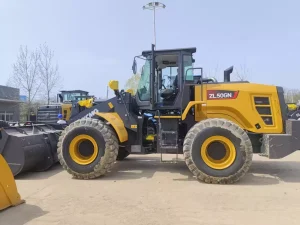 The ZL50GN is a practical candidate for buyers who want a widely used XCMG five-ton platform. Published material for one configuration lists a 5,000 kg rated load, a 2.5–4.5 m³ bucket range, and an operating weight near 17.5 tonnes. Dump clearance varies with the selected working device.
It can suit aggregate yards, road work, batching plants, and general earthmoving. Buyers should check the exact engine, transmission, axles, hydraulic components, and emissions package because units from different years or destinations may not be identical.
A used ZL50GN deserves a careful articulation-joint and transmission test. Check pin movement, oil leaks, shift delay, axle noise, brake response, and bucket linkage wear. A good-looking cab cannot offset an expensive drivetrain problem.
When the LiuGong 856H May Fit Better
 The LiuGong 856H is often chosen for mature powertrain matching and quick loading work. The supplied reference lists a rated load of 5–5.5 tonnes, an operating weight of about 17.1–20.2 tonnes, and a 3.5 m³ standard bucket on one configuration. It also cites a 9.3-second hydraulic cycle for the referenced version.
This model can fit batching plants, mines, infrastructure sites, and truck-loading work. The wider listed weight and bucket ranges show why buyers must identify the exact version. Engine, transmission, emissions equipment, counterweight, and bucket can all change the final specification.
For a used 856H, test hydraulic response after the oil warms up. Check directional shifts under load and listen for axle or transmission noise. Review maintenance records for filters, oils, cooling work, and major component repairs.
Match the Loader to the Job Site
The most suitable machine is the one that completes your normal cycle with the least waste. Use the following job-based guide before choosing between brands.
Aggregate Yard or Quarry
Choose a reinforced bucket, suitable teeth, heavy-duty tires, and strong cooling. Breakout force and stability matter. Rock impact can damage a light bucket or standard tires. Ask about axle protection and filtration for dusty work.
Concrete Batching Plant
Fast cycles, accurate bucket control, and suitable dump height are important. A general-purpose bucket may work well with sand and gravel. Measure the hopper and site turning area before choosing a standard or high-dump setup.
Road and Infrastructure Work
A balanced machine is more useful than one built for only one task. Check travel speed, ride comfort, braking, visibility, and attachment support. A quick coupler may help when the loader changes between a bucket, forks, and other tools.
Mine or Heavy Load-and-Carry Work
Cooling, transmission durability, braking, and tire choice move to the top of the list. Long travel distances can raise fuel use and tire heat. Test the loader on a similar route before buying when possible.
Farm, Port, or Light Material Work
A large light-material bucket can increase volume per cycle. It must still stay within the loader’s rated load and stability limit. Confirm material density and ask for the approved bucket chart.
[Internal Link: construction equipment buying guide]
Inspect the Machine and Calculate Ownership Cost
A low price does not guarantee a low-cost loader. Fuel, tires, repairs, transport, parts, and downtime shape the real return. Compare the same work output, not only hourly fuel use.
Inspect these items before buying:
- Cold engine starting and exhaust smoke
- Engine oil, coolant, and visible leaks
- Transmission response in forward and reverse
- Axle noise and brake performance
- Hydraulic speed after the oil becomes warm
- Lift-arm, bucket-linkage, and articulation-pin wear
- Frame, boom, and bucket weld repairs
- Tire tread, cuts, and matching tire sizes
- Cab controls, gauges, alarms, and visibility
- Serial plates, service records, and working hours
Run a loading test with material close to your real job. Time several full cycles. Check bucket fill, wheel slip, hydraulic response, braking, and engine temperature. One short idle test reveals very little.
Estimate ownership cost for three to five years. Include expected hours, fuel, tires, service, transport, finance, and likely downtime. Also ask how quickly common filters, seals, hoses, pins, and electrical parts can reach your site.
[Internal Link: used wheel loader inspection checklist]
Buy Through MachPlaza with a Clear Specification
Include these details in your request:
- Main material and density
- Required output per hour
- Loading height and truck type
- Ground, slope, and travel distance
- Destination country and emission rules
- Preferred brand, year, and budget
- New or used equipment preference
- Required attachments and spare parts
Ask for a written configuration list, current photos, a cold-start video, and a working test. For used equipment, request operating hours and service records. Final model specifications should appear in the quotation and sales contract.
A clear request makes ZL50GN and LiuGong 856H offers easier to compare. It also reduces the risk of receiving the wrong bucket, tires, engine version, or working device.
[Internal Link: contact MachPlaza]
The Bottom Line
Choose a 5ton loader around the material and cycle. The XCMG ZL50GN can suit buyers who want a common, heavy-duty XCMG platform. The LiuGong 856H can suit buyers who value mature powertrain matching and quick loading performance.
Neither model wins every job. Compare the exact configuration, not only the name on the engine cover. Confirm rated load, bucket, operating weight, dump clearance, tires, emissions package, and local parts support.
The best loader should fill the bucket well, clear the target truck, turn safely on site, and remain easy to service. A real loading test and a written specification are more useful than a long feature list.
Before signing, compare both offers on the same basis. Use the same material, bucket type, operating hours, transport terms, warranty, and spare-parts package. A cheaper quotation may exclude tires, attachments, inspection, or delivery. The final contract should list every major component and accepted test result.
FAQs
Q1: Is a 5-ton loader the same as a five-ton machine weight?
No. The term usually describes rated payload. Operating weight is much higher and changes with equipment.
Q2: ZL50GN or LiuGong 856H—which one should I buy?
Match the exact configuration to your work. Compare bucket, dump height, powertrain, condition, parts, and test results.
Q3: Can I use a large bucket on dense rock?
Usually not without limits. Dense material can overload the machine. Use the approved bucket chart.
Q4: How much bucket capacity does a 5ton loader need?
Around three cubic meters is common for general work. The right size depends on material density and bucket design.
Q5: Does more engine power mean faster loading?
Not alone. Hydraulics, transmission matching, bucket fill, traction, and operator skill also control cycle time.
Q6: What dump height should I choose?
Measure the receiving truck or hopper. Add safe clearance, then confirm the figure with the selected bucket.
Q7: What should I test on a used loader?
Check cold starting, shifting, hydraulics, brakes, axles, pins, leaks, tires, and weld repairs. Test it under load.
Q8: Are published specifications always the same worldwide?
No. Engine, emissions, tires, counterweight, bucket, and transmission can vary by market and model year.
Q9: Which tires work best?
Match the tread and casing to the ground. Rock, sand, mud, and paved yards need different tire choices.
Q10: What information should I send a supplier?
Send the material, output target, loading height, site conditions, destination, budget, and required attachments.
