
Rough Terrain Crane Performance and Construction: Off-Road Mobility, Lifting Capacity and Design Features

Industry News

2026/09/04
Ever seen a crane driving down a muddy job site without a truck pulling it? That’s a rough terrain crane. It has big tires, four-wheel drive, and a compact body. These machines lift heavy loads where paved roads don’t exist. But not all rough terrain cranes suit every job. Some handle steep hills. Others fit tight spaces. Pick the wrong one and it gets stuck. Pick the right one and you keep the project moving.
What Is a Rough Terrain Crane?
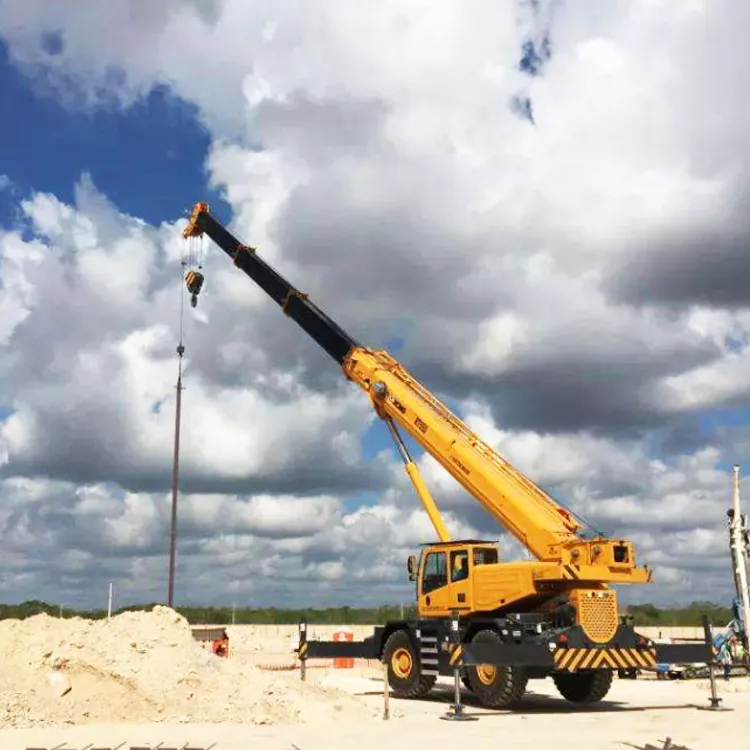
A rough terrain crane is a mobile crane built for off-road work. It sits on a single chassis with large tires. The engine powers both travel and crane functions. Outriggers extend for lifting. But between jobs, the crane drives itself across dirt, gravel, and mud.
These cranes fill a gap between truck cranes and crawlers. Truck cranes need good roads. Crawler cranes move too slow. Rough terrain cranes handle the middle ground.
Off-Road Mobility
The big tires are the key. They are tall and wide with deep treads. This gives grip on loose surfaces. Four-wheel drive puts power to all tires. Some models have all-wheel steer. This lets them turn in tight spots.
Ground clearance matters too. Rough terrain cranes sit higher than truck cranes. They climb over rocks and ruts without scraping the belly.
The compact size helps on tight job sites. Many models are under 12 feet wide. They fit between buildings and under power lines. Some have crab steer. All wheels turn the same way. The crane moves sideways into tight spaces.
Speed is limited. Most rough terrain cranes top out at 20 to 25 mph. They are not for highway travel. You haul them on a lowboy for long moves. But on site, they move fast enough.
Lifting Capacity
Rough terrain cranes lift 15 to 130 tons. The most common sizes are 30 to 60 tons. Capacity depends on boom length and outrigger setup.
The boom is usually a telescopic box section. It extends in sections with hydraulic cylinders. Working height ranges from 80 to 200 feet. Some models add a jib for extra reach.
Capacity drops as the boom extends. A 50-ton crane might lift 50 tons at close radius. At full boom and radius, it lifts much less. Always check the load chart. Never guess.
Outriggers spread the load. They extend horizontally and vertically. The crane sits on pads or timbers under the outrigger feet. Soft ground needs bigger pads. Some cranes have automatic leveling. The system adjusts each outrigger to keep the crane level.
Design Features
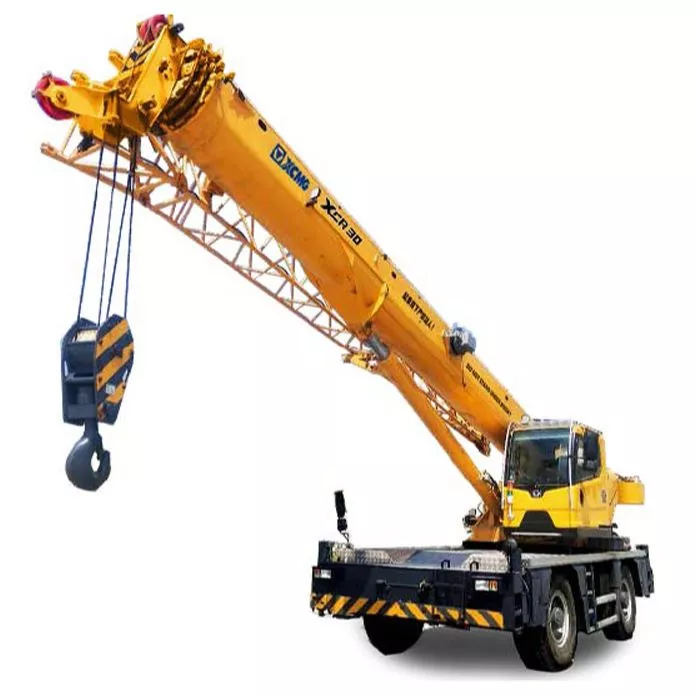
Single Engine
Most rough terrain cranes use one engine. It powers the carrier for driving. It also powers the crane through a transfer case. This saves weight and cost. But it means you can’t drive and lift at the same time.
Cab Design
The operator cab sits high for good visibility. It tilts back for travel and forward for lifting. Modern cabs have air conditioning, joysticks, and load moment indicators. The LMI warns if you approach capacity limits.
Counterweights
Rough terrain cranes use removable counterweights. You add weight for heavy lifts. You remove weight for travel. This keeps the machine lighter and more mobile.
Boom Design
The boom is high-strength steel. It resists bending under load. Some models have pinned boom sections. Others have full power telescoping. Power telescoping is faster and needs less setup.
Key Considerations When You Buy
Job Site Access
Check the ground. Is it firm or soft? Steep or flat? Tight or open? Match the crane to the worst conditions you expect.
Lift Requirements
List your typical loads. Check weight, radius, and height. Pick a crane that handles 80% of your lifts without pushing limits.
Transport Needs
Rough terrain cranes need hauling for long moves. Check trailer requirements. Some states need permits for wide loads.
Maintenance
These cranes work hard. Dust, mud, and vibration wear parts fast. Pick a brand with local parts and service.
A Few Points
Rough terrain cranes cost more than truck cranes. But they save on support equipment. No need for a separate haul truck on many jobs.
Tire pressure matters. Lower pressure gives better grip on sand. Higher pressure works on rock.
Outrigger pads spread load. Use big pads on soft ground. A sunken outrigger tips the crane.
Wind affects capacity. Check the manual for wind limits. Most rough terrain cranes stop work at 20 to 25 mph wind.
One More Thing
Rough terrain cranes are the Swiss Army knife of lifting. They drive to the job, set up fast, and lift where other cranes can’t go. For construction, oil and gas, and utility work, they are hard to beat.
Need a rough terrain crane? MachPlaza lists new and used units from many brands. Compare specs, prices, and seller ratings in one place.
FAQs
1. What’s the difference between a rough terrain crane and an all-terrain crane?
Rough terrain cranes work off-road but need hauling on highways. All-terrain cranes drive on highways and work off-road. All-terrain cranes cost more and go faster.
2. How much can a rough terrain crane lift?
Common sizes lift 30 to 60 tons. Big models hit 100 tons or more. Check the load chart for your boom length and radius.
3. Can a rough terrain crane drive on pavement?
Yes, but slowly. The tires wear fast on hard roads. Most owners haul them on trailers for long moves.
4. How long does setup take?
Ten to thirty minutes. Extend outriggers, level the crane, and extend the boom. Faster than crawler cranes.
5. What ground conditions suit rough terrain cranes?
Dirt, gravel, mud, and uneven ground. They handle slopes better than truck cranes. Very soft ground needs mats or bigger outrigger pads.
6. Do I need a special license to operate one?
Most areas need a mobile crane operator license. Check local rules. Training covers setup, lifting, and safety.
7. How long does the boom extend?
Most models reach 100 to 150 feet. Some hit 200 feet with a jib. Check specs before you buy.
8. Are rough terrain cranes good for city work?
They fit some city sites. But they are wider than truck cranes. Check access roads and gate widths.
9. What brands make rough terrain cranes?
Tadano, Terex, Grove, Link-Belt, and XCMG are common. Each has different sizes and features.
10. Where can I find rough terrain cranes for sale?
MachPlaza lists rough terrain cranes from many sellers. Filter by tonnage, boom length, and price.
