How to Choose the Right Aerial Work Platform: Scissor, Boom Lift and Key Considerations

Industry News

2026/09/03
Ever watched workers fix street lights or paint a warehouse ceiling? They don’t use ladders. They stand on aerial work platforms. These machines lift people and tools to height safely. But pick the wrong type and you waste money. Pick the right one and the job gets done fast and safe.
Scissor Lift: Straight Up and Down
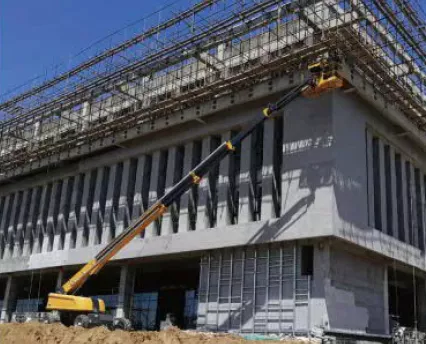
Scissor lifts move only vertical. The platform goes straight up on crossed metal arms. These arms fold like scissors when you lower the machine.
Scissor lifts carry more weight than boom lifts. Most models hold 500 to 1,000 pounds. That means multiple workers plus tools and materials. The platform is large. Workers have room to move around.
These machines work best indoors. Warehouses, factories, and retail stores use them often. The wheels are small and non-marking. They don’t damage floors.
Outdoor models have rough-terrain tires. They handle dirt and gravel. But they still only move straight up. You can’t reach over obstacles.
Working height ranges from 20 feet to 50 feet. Platform height is about 6 feet less than working height. A 26-foot scissor lift puts the platform at 20 feet.
Boom Lift: Reach Over and Around
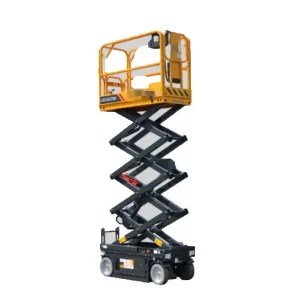
Boom lifts have an arm that extends outward. This lets you reach over walls, machines, and other obstacles. Two main types exist.
Articulating Boom Lift
This boom has joints. It bends like a human arm. The joints let you reach up and over obstacles. Then you can drop the platform down behind the obstacle. These suit complex job sites with many barriers.
Working height ranges from 30 feet to 150 feet. The platform holds 500 pounds or less. That’s one worker plus light tools.
Telescopic Boom Lift
This boom extends straight out. No joints. It reaches farther horizontally than an articulating boom. Construction sites and bridge work use them often. They also handle higher wind speeds.
These lifts need more space. The base is wider. The boom swings in a large arc. You can’t use them in tight indoor spots.
Mast Lift: Tight Spaces, Light Work
Mast lifts are small vertical lifts. They fit through standard doorways. Some models are only 30 inches wide. Warehouses and office buildings use them for maintenance.
The platform is small. It holds one person and light tools. Working height tops out around 25 feet. But for changing light bulbs or fixing HVAC, that’s enough.
Key Considerations When You Choose
Working Height
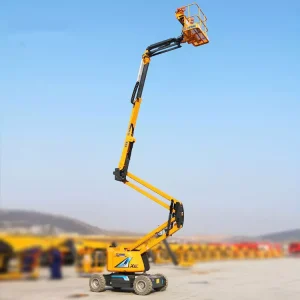
Measure the highest point you need to reach. Add 6 feet for worker arm reach. Then pick a machine that reaches that height. Don’t guess. A machine that falls short is useless.
Weight Capacity
Count workers plus tools plus materials. Scissor lifts hold the most. Boom lifts hold less. Overloading is dangerous and voids warranties.
Indoor vs Outdoor
Indoor jobs need non-marking tires and tight turning radius. Outdoor jobs need rough-terrain tires and diesel or gas power. Electric machines work indoors. Diesel machines work outdoors.
Space Constraints
Check door widths, aisle widths, and ceiling heights. Some scissor lifts fold narrow. Some mast lifts fit through doorways. Boom lifts need more room to set up and swing.
Power Source
Electric machines run quiet and clean. They suit indoor work. Battery life lasts 6 to 8 hours. Diesel machines run longer and handle rough ground. They suit outdoor work.
Terrain
Smooth concrete? Any machine works. Gravel or dirt? You need rough-terrain tires and four-wheel drive. Slopes matter too. Check the grade rating on the spec sheet.
Safety Points
Guardrails
All platforms have guardrails. Workers must stand inside them. No sitting or climbing on rails.
Harnesses
Boom lifts need harnesses and lanyards. The platform can bounce. A harness keeps you from falling out. Scissor lifts usually don’t need harnesses if guardrails are up.
Wind Speed
Check the wind rating. Most lifts stop work at 25 to 28 mph. High winds tip machines over. Don’t risk it.
Ground Conditions
Set up on firm, level ground. Use outriggers if the machine has them. Soft ground sinks. Slopes tip machines.
A Few Points
Scissor lifts cost less to rent than boom lifts. Rent the right tool for the job.
Electric machines need charging time. Plan your work around battery life.
Boom lifts need more operator training. The swing radius and outreach add risk.
Inspect the machine before each shift. Check hydraulics, tires, and controls.
One More Thing
Aerial work platforms save time and prevent falls. But only if you pick the right one. Match the machine to the height, weight, space, and ground conditions. Then train your workers and inspect the equipment.
Need an aerial work platform? MachPlaza lists scissor lifts, boom lifts, and mast lifts from many brands. Compare specs, prices, and seller ratings in one place.
FAQs
1. What’s the difference between a scissor lift and a boom lift?
Scissor lifts go straight up. They carry more weight. Boom lifts reach outward and over obstacles. They carry less weight but reach farther.
2. How high can scissor lifts go?
Most models reach 20 to 50 feet working height. Some special models go higher.
3. Do I need a harness on a scissor lift?
Usually no, if guardrails are in place. Check local rules. Boom lifts always need harnesses.
4. Can I use a boom lift indoors?
Some electric boom lifts work indoors. Diesel models need ventilation. Check ceiling height and floor load limits.
5. How much weight can a boom lift hold?
Most hold 500 pounds or less. That’s one worker plus tools. Check the spec plate.
6. What’s better, articulating or telescopic boom?
Articulating booms bend around obstacles. Telescopic booms reach farther straight out. Pick based on your job site layout.
7. How long do batteries last on electric lifts?
Six to eight hours of normal use. Keep a charger nearby for long shifts.
8. Can scissor lifts work on slopes?
Most handle slight slopes only. Check the grade rating. Rough-terrain models handle more slope than slab models.
9. Do I need special training to operate these machines?
Yes. Most areas require certification. Training covers setup, operation, and emergency procedures.
10. Where can I find aerial work platforms for sale or rent?
MachPlaza lists scissor lifts, boom lifts, and mast lifts. Filter by height, brand, and price.
