
How to Choose a Small Crawler Excavator?

Industry News

2026/10/22
Choosing a small crawler excavator starts with the work, not the brochure. A larger engine does not always bring better digging. A lower buying price does not always reduce project costs. The right machine must fit the site, soil, workload, transport plan, and local service network.
For many buyers, the main choice sits between a 3.5t excavator and a 6t excavator. Both belong to the small excavator market. Yet they serve different projects. This guide explains what to compare before you place an order.
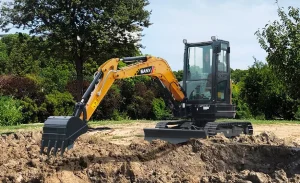
Match the Excavator Size to Your Main Work
List your regular jobs before comparing brands or prices. Note the digging depth, trench width, soil type, lifting needs, and working space. A machine that fits 70 percent of your jobs is often a safer investment than one bought for a rare project.
A 3.5t excavator suits confined sites and lighter duties. It can work near houses, inside gardens, and along narrow access roads. Common jobs include utility repairs, landscaping, shallow trenching, and small foundation work. Its lower weight also makes transport easier between short projects.
A 6t excavator offers more digging force and higher daily output. It is better for municipal pipelines, rural drainage, road repair, and larger foundations. Six-ton machines can grade and load more efficiently. They also give contractors more room to accept heavier work.
| Buying factor | 3.5t excavator | 6t excavator |
|---|---|---|
| Best use | Landscaping and light trenching | Municipal and general earthwork |
| Working space | Very narrow sites | Small to medium sites |
| Transport | Easier with lighter equipment | Needs more transport capacity |
| Daily output | Moderate | Higher |
| Common tools | Buckets and light attachments | Buckets, breakers, and grapples |
Do not choose only for the biggest job you may receive. A large machine may struggle in narrow areas. It may also cost more to move. Compare expected daily output with fuel and transport costs.
Check the Site, Tracks, and Tail Swing
Crawler machines work well on soil, gravel, and uneven ground. Their long ground contact area spreads machine weight. This gives useful stability, but the track setup must match the surface.
Standard steel tracks suit normal earthwork. Wider track shoes help on mud and soft farmland. They lower ground pressure and reduce sinking risk. Rubber tracks or rubber pads protect asphalt and finished concrete. They are useful for urban repair and landscaping.
Tail swing also matters. A conventional tail needs more turning room. Zero-tail or short-tail designs can work closer to walls and traffic lanes. Measure the narrowest entrance before selecting a model. Check the total machine width with its chosen tracks.
Inspect the undercarriage carefully. Rollers, idlers, sprockets, and track tension parts face constant wear. Breaker work adds more stress. A strong undercarriage can reduce repair costs over long working cycles.
The dozer blade also supports machine stability. It helps during digging, backfilling, and grading. Check blade width, lift range, and hydraulic protection. These points matter when the excavator works on slopes or uneven ground.
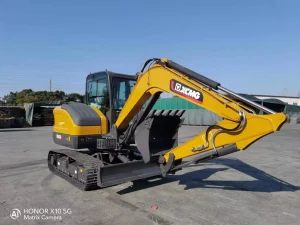
Compare Hydraulics, Attachments, and Operator Control
Engine power is only one part of excavator performance. Hydraulic pressure, pump flow, valve control, and machine balance also matter. Two machines with similar engine ratings can feel very different at work.
Test combined movements during a demonstration. Raise the boom while turning and curling the bucket. The machine should remain smooth and easy to control. Delayed or jerky movement can slow grading and trench work.
Check bucket breakout force and arm digging force. Then compare both figures with machine weight and stability. A powerful upper structure still needs a firm undercarriage. Balance becomes important during side digging and lifting.
Attachment plans should guide your choice. Ask whether the machine supports breaker piping, quick couplers, grapples, and different buckets. A quick coupler reduces tool-changing time. Extra hydraulic lines may support more advanced tools.
Operator comfort affects output during long shifts. Check cab visibility, seat support, control effort, noise, and air conditioning. Service points should also be easy to reach. A cooling pack that opens for cleaning can help prevent overheating on dusty sites.
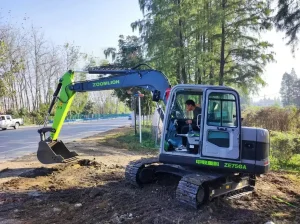
Calculate Ownership Cost Before You Buy
The purchase price is only the first cost. Fuel, transport, maintenance, parts, and downtime shape the real return. A cheap machine can become expensive when one failed part stops work for weeks.
Check the local supply of filters, seals, hoses, and undercarriage parts. Ask how quickly common parts can ship. Review the dealer network and technical support process. Clear warranty terms may be worth more than a low headline price.
Before buying, inspect these items:
- Cold engine starting
- Hydraulic response under load
- Track and roller wear
- Boom and arm welds
- Hose routing and leaks
- Cab visibility and controls
- Service records for used machines
- Attachment and transport requirements
Estimate the cost for three years. Include expected working hours, fuel, routine service, transport, and likely downtime. This gives a fair comparison between a 3.5-ton and 6-ton machine.
MachPlaza can help buyers compare small excavator options for landscaping, municipal work, rural construction, and equipment rental. Send the main job type, required depth, access width, ground conditions, attachments, destination country, and emission rules. Ask for confirmed specifications, clear photos, an inspection video, and a written configuration list before ordering.
The cheapest machine is not always the lowest-cost choice. Choose a model that can enter your common sites, finish work at a profitable pace, and remain simple to maintain.
FAQs
Q1: Is a 3.5t excavator large enough for foundation work?
It can handle small foundations and shallow trenches. Larger or harder jobs may need a 6-ton machine.
Q2: When should I choose a 6t excavator?
Choose it for regular earthwork, municipal pipelines, rural construction, and jobs where daily output matters.
Q3: Are wider tracks always better?
No. Wider tracks help on soft ground. Standard tracks may move better on firm sites and tight routes.
Q4: Does more engine power mean more digging force?
Not by itself. Pump flow, hydraulic pressure, valve control, and machine balance also affect performance.
Q5: Should I choose zero-tail swing?
Choose it for work near buildings, walls, or roads. Conventional tails may suit open sites.
Q6: Which attachments add the most value?
Buckets, breakers, grapples, and quick couplers cover many common jobs. Match them to hydraulic capacity.
Q7: What should I inspect on a used machine?
Check service records, leaks, undercarriage wear, weld repairs, cold starting, and combined hydraulic movements.
Q8: How do I compare two excavators fairly?
Use the same work cycle and attachment. Compare output, fuel use, control, service access, and transport needs.
Q9: Can one machine handle urban and rural work?
Yes, if its size fits both sites. A compact tail and suitable tracks improve flexibility.
Q10: What should I send a supplier?
Send the job type, soil, access width, digging depth, attachments, destination, and emission requirements.
