
Reach Stacker Uses: Ports, Rail Terminals, Intermodal & More

Industry News

2026/10/11
Ever watched a port at work? Containers move nonstop. Trucks line up. Ships wait. Someone needs to lift, stack, and shift those boxes fast. That someone is often a reach stacker.
A reach stacker is a mobile crane on wheels. It lifts containers with a telescopic boom. It stacks them high. It loads trucks and trains. Ports, rail yards, and intermodal hubs all use them daily. This guide shows where they fit and why teams pick them.
What Is a Reach Stacker?
A container reach stacker looks like a big forklift. But it does more. It picks up containers from the top using a spreader. The boom extends forward and upward. This lets the machine reach over rows of boxes. It stacks laden containers five or six high. It stacks empties even higher. Most units handle 10 to 46 tons under the spreader. Some heavy models go up to 80 tons.
The machine drives on rubber tires. It does not need rails or fixed paths. One operator runs the whole unit. That mobility is its biggest strength.
Ports and Container Terminals
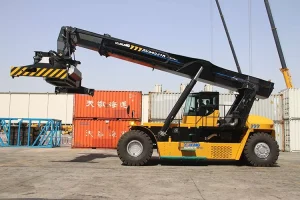 Large ports use giant gantry cranes for ship work. But reach stackers still play a key role. They handle the jobs that fixed cranes cannot reach.
- Yard stacking. Reach stackers stack containers in the storage yard. They place boxes in rows. They reach across multiple rows to grab the right one. This keeps the yard tidy and saves space.
- Truck loading and unloading. At the gate, trucks need quick service. A reach stacker lifts containers on and off chassis. It works faster than waiting for a gantry crane to free up.
- Customs and inspection zones. Officials pick certain containers for checks. A reach stacker pulls those boxes out. It moves them to a scan or weigh station. The main yard keeps running.
- Overflow and peak support. Busy seasons hit every port. Extra volume needs extra gear. Reach stackers fill the gap. They move boxes to overflow areas. They help when primary cranes are tied up.
- Support for special cargo. Not every box is standard. Some loads need gentle handling. Reach stackers adjust lift angles. They place odd-sized containers where needed.
Rail Terminals
Rail yards move containers between trains and trucks. This is called intermodal work. Reach stackers fit here better than almost any other machine.
- Direct rail car loading. The stacker drives to the rail siding. It lifts a container from a truck. It places it straight onto a rail car. One move. No extra steps. That saves time and labor.
- Unloading inbound trains. Trains arrive full. The reach stacker pulls containers off wagons. It stacks them for storage or loads them onto outbound trucks. The whole flow stays smooth.
- Cross-modal transfer. Goods switch between road and rail all day. The reach stacker sits in the middle. It handles both sides. One machine covers two transport modes.
- Multi-row reach. Rail tracks take up space. Containers often sit two or three rows deep. The telescopic boom reaches across those rows. The operator grabs the right box without moving others.
- Negative lift. Some rail cars sit low. The spreader must drop below ground level. Many reach stackers handle this. They lift from low wagons and place high stacks.
Intermodal Hubs and Inland Ports
Intermodal hubs sit away from the coast. They connect trains, trucks, and storage. These sites need flexible gear. Fixed cranes cost too much. Reach stackers solve this.
- Single-machine versatility. One unit stacks, loads trucks, and serves rail. You do not need three different machines. That cuts costs and training time.
- Space savings. Land is expensive. Reach stackers stack high and deep. They pack more containers into a small yard. This matters at inland ports where space is tight.
- Fast deployment. Setting up a gantry crane takes months. A reach stacker arrives on a truck. It works the same day. This helps new terminals start fast.
- Mixed container sizes. Hubs see 20-foot, 40-foot, and 45-foot boxes. Telescopic spreaders adjust to each size. The operator switches in minutes.
Key Specs to Know
| Feature | Typical Range |
|---|---|
| Lift capacity | 10 – 46 tons (up to 80 tons for heavy models) |
| Stacking height | 5–6 high laden; 8 high empty |
| Reach depth | Up to 3 rows |
| Container sizes | 20ft, 40ft, 45ft |
| Power | Diesel, hybrid, or electric |
Electric models cut energy costs by 35 to 45 percent. They also run quieter. That helps ports near cities.
Why Teams Pick Reach Stackers
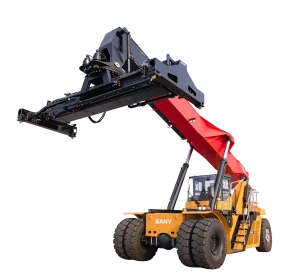
- Flexibility. The machine moves anywhere in the yard. It is not stuck on rails.
- Lower upfront cost. A reach stacker costs less than a gantry crane. Small and mid-size terminals can afford a fleet.
- Multi-purpose use. One unit does stacking, truck work, and rail work. That reduces the number of machines you need.
- Easy to scale. Buy one unit to start. Add more as volume grows. No need to rebuild the yard.
One More Thing
Reach stackers are not just backup gear. They are core equipment at many ports and rail yards. They bridge the gap between fixed cranes and road transport. For mid-size terminals and intermodal hubs, they often make the most sense.
If you need a container reach stacker, check MachPlaza. They list units from XCMG, SANY, Zoomlion, and other top brands. You can compare specs, prices, and lift capacity in one place. Find the right container lifter for your yard today.
FAQs
Q1: What is a reach stacker used for?
It lifts, moves, and stacks containers. It works at ports, rail yards, and intermodal hubs.
Q2: How high can a reach stacker stack?
Most stack laden containers five or six high. Empty containers go up to eight high.
Q3: Can it load rail cars?
Yes. It lifts containers from trucks or stacks and places them directly onto rail wagons.
Q4: What sizes of containers can it handle?
Standard models handle 20-foot and 40-foot boxes. Some spreaders fit 45-foot containers too.
Q5: Is a reach stacker better than a gantry crane?
Not always. Big ports need gantry cranes for volume. But reach stackers win on flexibility and cost for mid-size sites.
Q6: How much can a reach stacker lift?
Common models lift 10 to 46 tons under the spreader. Heavy-duty units go higher.
Q7: Do they come in electric?
Yes. Electric and hybrid models are available. They cut fuel costs and noise.
Q8: How many moves per year suits a reach stacker fleet?
Terminals handling 40,000 to 120,000 moves per year often use reach stackers as primary gear.
