
Electric vs Diesel Scissor Lift: Which Power Type Is Right?

Industry News

2026/09/28
Picking the wrong scissor lift for your job site wastes time and money. An electric lift on rough ground gets stuck. A diesel lift indoors fills the room with fumes. The choice between electric and diesel is not about brand loyalty. It is about where you work and what you need to do.
This guide breaks down both power types so you can pick the right machine for your project.
What Sets Them Apart
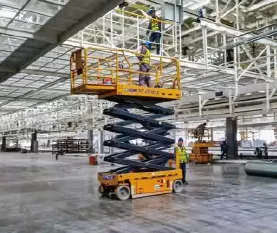
Scissor lifts raise workers and tools to height. The platform goes straight up on a crisscross frame. Both electric and diesel versions do this same basic job. The difference is what powers the hydraulics and drive system.
Electric scissor lifts run on rechargeable batteries. They plug in at night and work all day on a full charge. Diesel scissor lifts have a combustion engine like a truck. They burn fuel and run as long as you keep the tank full.
That simple difference changes everything about where and how you use each machine.
Electric Scissor Lifts: Quiet and Clean
Electric lifts shine indoors. They produce no exhaust fumes. That makes them safe for warehouses, shopping centers, hospitals, and office buildings. Workers can breathe easy without ventilation systems running.
The noise level is low too. Electric motors hum instead of roar. That matters in occupied buildings, schools, and residential areas. Night work becomes possible when noise rules would stop a diesel machine.
Most electric models have non-marking tires. They roll across finished floors without leaving black streaks. That saves cleanup time and protects tile, epoxy, and polished concrete surfaces.
The compact size helps in tight spaces. Many electric lifts fit through standard doorways. They turn in narrow aisles and work between racking rows. That is a big plus in retail fit-outs and warehouse maintenance.
Running costs stay low. No fuel bills. Fewer moving parts mean less maintenance. Brake pads last longer because regenerative braking slows the machine without friction.
But electric lifts have limits. They need flat, smooth surfaces. Rough terrain, gravel, and mud stop them cold. The ground clearance is low. The tires are small and not built for abuse.
Battery life sets the work pace. Most electric lifts run 8 to 10 hours on a charge. That covers a standard shift. But forget to plug in overnight and you lose half a day. Cold weather also cuts battery performance.
Diesel Scissor Lifts: Tough and Powerful
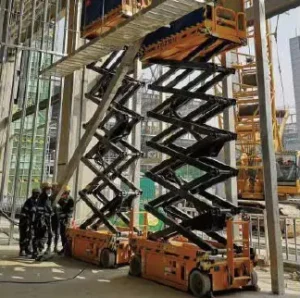
Diesel lifts rule the outdoors. They have four-wheel drive, big tires, and high ground clearance. Uneven ground, gravel, mud, and slopes do not slow them down. They climb grades that would strand an electric lift.
The engine power shows in lift capacity too. Diesel platforms often hold 1,500 pounds or more. That means more workers, more tools, and more material up top. Productivity goes up when the crew and gear ride together.
Working height reaches higher on diesel models. Some go to 14 meters or beyond. Electric lifts top out lower, usually around 10 meters. For tall buildings and infrastructure work, diesel is often the only choice.
Runtime is unlimited in practice. Refuel in minutes and keep working. No charging breaks. No range anxiety. The machine runs as long as the operator does.
The downsides are clear. Diesel exhaust is dangerous indoors. Carbon monoxide builds up fast in enclosed spaces. Even with ventilation, most sites ban diesel lifts inside. The noise is loud too. Engines rumble at levels that disturb workers and neighbors.
Weight becomes an issue. Diesel lifts are heavy. They can damage floors, especially on upper levels. Transport costs more. Some elevators and ramps cannot handle the load.
Maintenance runs higher. Oil changes, filter swaps, and engine tune-ups add up. Fuel prices fluctuate. Over a long rental period, those costs matter.
Where Each One Works Best
The job site tells you which lift to pick. Here is a quick guide.
Pick electric for:
Indoor construction and fit-outs
Warehouses and distribution centers
Retail spaces with finished floors
Hospitals, schools, and care facilities
Data centers and clean rooms
Night work near homes
Any site with emissions rules
Pick diesel for:
Outdoor construction sites
Rough or unpaved ground
Slopes and muddy conditions
Heavy loads and big crews
Tall structures over 10 meters
All-day shifts without charging
Sites with no power accessSome projects need both. A mixed-use job might start outdoors with diesel and move indoors with electric. Renting both types for different phases beats forcing one machine to do everything.
Modern Options Worth Knowing
Hybrid scissor lifts now exist. They switch between battery and diesel power. Run electric indoors and diesel outdoors. One machine covers both zones. The trade-off is higher rental cost and more complex maintenance.
Lithium battery tech has improved. New electric lifts run longer and charge faster. Some hit 10 hours of runtime with quick midday top-ups. The gap between electric and diesel runtime keeps shrinking.
Rough-terrain electric lifts are also on the market. They have bigger tires and four-wheel drive but still run on batteries. They handle mild off-road conditions without fumes. They are not as capable as diesel on bad ground, but they bridge the gap for some jobs.
Getting a Good Deal
Rental rates for electric and diesel lifts are often close. The real cost difference shows in fuel, maintenance, and downtime. Electric wins on operating costs. Diesel wins on versatility and raw power.
Think about delivery and pickup too. Diesel lifts need bigger trucks. Electric lifts are lighter and easier to move. Factor transport into your total cost.
Ask about age and hours. A well-maintained older diesel lift might outperform a new electric one on rough ground. A new electric lift with fresh batteries runs longer than an older unit with worn cells.
Meet MachPlaza
MachPlaza stocks both electric and diesel scissor lifts from top brands. We carry XCMG, JLG, Genie, and Zoomlion models. Our team helps you match the machine to your site conditions.
We inspect every unit before delivery. You get photos, hour readings, and condition reports. No surprises when the lift shows up.
Shipping and customs? We handle that too. MachPlaza delivers worldwide. Tell us your project timeline and we get the right lift there on schedule.
Contact us today for a quote on electric or diesel scissor lifts.
One More Thing
The electric vs diesel debate has no single winner. It depends on your ground, your building, and your work schedule. Indoor jobs favor electric. Outdoor jobs favor diesel. Mixed jobs might need both.
Do not let rental price alone drive the choice. A cheap diesel lift that cannot go indoors wastes money. An electric lift that gets stuck in mud wastes more. Match the machine to the job and both your budget and your timeline will thank you.
FAQs
1. Can I use a diesel scissor lift indoors?
No. Diesel exhaust is dangerous in enclosed spaces. Most sites ban them indoors. Use electric or hybrid lifts instead.
2. How long do electric scissor lift batteries last?
Most run 8 to 10 hours on a full charge. Lithium models may run longer. Cold weather shortens battery life.
3. Do electric lifts work outside at all?
Yes, on paved, level surfaces. They do not handle rough terrain, gravel, or slopes. Keep them on finished ground.
4. Which type lifts more weight?
Diesel lifts usually have higher platform capacity. Many handle 1,500 pounds or more. Electric lifts carry less, often around 500 to 1,000 pounds.
5. Are electric scissor lifts cheaper to run?
Yes. No fuel cost. Less maintenance. Longer brake life. The savings add up over a long rental period.
6. What is the max height for each type?
Electric lifts typically reach about 10 meters. Diesel lifts often go to 14 meters or higher. Check specs for the exact model.
7. Can one lift do both indoor and outdoor work?
Hybrid lifts can switch power types. Rough-terrain electric lifts handle mild outdoor conditions. For tough ground, diesel is still the best choice.
8. Do electric lifts need special charging setup?
A standard outlet works for most. Some larger models need a higher voltage connection. Ask the rental company before delivery.
9. Which type is better for night work?
Electric. The low noise level meets most local rules. Diesel engines are too loud for residential areas at night.
10. How do I choose between renting and buying?
Short projects favor renting. Long-term, repeated use might justify buying. MachPlaza offers both options. Ask us for a cost comparison.
