
What Is a Motor Grader Used For? Grading, Slopes & Finishing

Industry News

2026/09/26
Ever watch a road crew work and wonder how they get that surface so flat? The answer is usually a motor grader. This machine does not dig deep holes or lift heavy loads. It shapes, levels, and finishes surfaces. That makes it one of the most important tools in road building and site prep.
A motor grader has a long wheelbase and a big blade in the middle. The blade can tilt, turn, and shift side to side. That gives the operator a lot of control over how material moves. It is this control that lets the machine do such precise work.
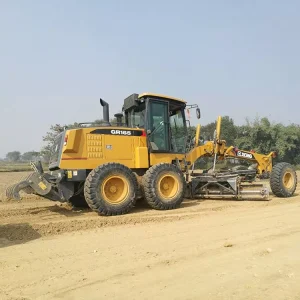
What a Motor Grader Actually Does
A motor grader is a surface-shaping machine. Its main job is to move small amounts of material over a wide area. It does not haul loads like a dump truck. It does not break rock like an excavator. Instead, it cuts high spots and fills low spots to create a smooth, even grade.
The blade sits between the front axle and the rear tandem wheels. The operator can angle the blade, tilt it, raise it, lower it, and shift it left or right. This lets the machine push material to one side, spread it evenly, or cut a flat path.
Most graders also have a scarifier or ripper on the back. This tool breaks up hard-packed soil or old pavement before the blade smooths the surface. Some models also have a dozer blade or front-mounted attachments for extra jobs.
Key Jobs on the Job Site
Motor graders handle many tasks across different phases of a project. Here are the main ones.
Rough Grading
Before any road or pad gets built, the ground must be close to the right level. A motor grader cuts down high areas and pushes that material into low areas. This rough grading gets the site ready for the next layer of work.
The operator works in passes, checking grade with stakes or a GPS system. Each pass gets the surface closer to the design level. Rough grading does not need to be perfect. It just needs to be close.
Fine Grading and Finishing
This is where the motor grader shines. After rough grading, the machine makes light passes to hit exact elevations. The blade takes off just a thin layer at a time. The result is a surface smooth enough for paving or building.
Fine grading needs slow speed and careful blade control. Many operators work at 1 to 2 mph for the final passes. Speed fights precision. Going slow gives better results.
Slope and Bank Work
Motor graders shape slopes on embankments, ditches, and road shoulders. The operator tilts the blade and uses the machine’s articulation to match the angle of the slope. For steep cuts, the auto-differential lock helps keep traction.
Bank cuts need the blade angled toward the slope. The heel of the blade stays outside the rear tires. Material casts inside the tandem wheels. The operator works from the top down in multiple passes.
Spreading Base Material
Gravel, crushed rock, and other base materials need even spreading. A motor grader pulls material from stockpiles and spreads it across the surface. The blade angle and pitch control how thick the layer is.
Spreading work often happens at a faster pace than finishing. The operator matches the speed to the rate of material delivery. The goal is an even layer without gaps or piles.
Ditch Cutting
Roads need drainage ditches to move water away from the surface. A motor grader cuts V-ditches and flat-bottom channels in single passes. The blade shape and tilt create the ditch profile.
Good ditch cutting prevents water damage to the road. It also protects nearby land from erosion. This is a task where the grader’s precision really matters.
Snow Removal
In cold climates, motor graders clear snow from roads and lots. The blade pushes snow to the side or into windrows. Some graders have special snow blades or wings for this work.
Snow removal is fast work. The operator uses higher speeds and bigger blade angles than in dirt work. The long wheelbase helps the machine stay stable on slippery surfaces.
Why Blade Setup Matters
The motor grader blade is the heart of the machine. How you set it up changes everything.
Blade pitch controls how aggressive the cut is. A shallow pitch, with the blade tipped forward, gives a smooth finish. A steep pitch, with the blade tipped back, digs in harder. Operators change pitch based on the material and the job.
Blade angle changes how material flows off the blade. A 30 to 45 degree angle works for hard soil cutting. A 40 to 55 degree angle works better for soft soil. A 60 degree angle spreads material evenly.
Blade tilt helps with slope work. Tilting the heel down casts material to the side. This is how operators shape road shoulders and embankments.
Side shift moves the blade left or right without moving the whole machine. This lets the operator work close to curbs, walls, and other obstacles.
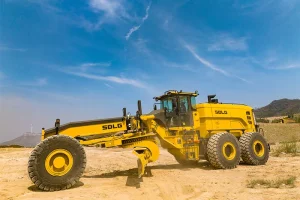
Modern Tech on Motor Graders
Today’s motor graders come with systems that make the work faster and more exact.
GPS and GNSS grade control shows the operator where the blade is compared to the digital design. The screen gives real-time feedback. This cuts down on survey checks and rework.
3D machine control links the grader to a BIM model. The blade adjusts automatically to match complex designs. This is great for intersections, ramps, and curved roads.
Laser receivers control elevation on flat surfaces. They give tight tolerance for jobs like airport runways and warehouse floors.
Sonic tracers follow existing surfaces or string lines. They help match curbs, gutters, and old pavement. Fewer passes means more production.
Cross-slope control keeps the blade tilt steady. The machine maintains the right transverse slope without the operator making constant adjustments. This reduces fatigue and improves consistency.
Picking the Right Motor Grader
Not every grader fits every job. Here is what to think about when you choose one.
Size and power matter for the scale of work. Small graders work well for parking lots and local roads. Big graders handle highways, airports, and mining haul roads. Engine power ranges from about 100 to 500 horsepower.
Blade width affects how much ground you cover in one pass. Wider blades move more material but need more power. Narrow blades work in tight spaces.
Tires or tracks change where you can work. Wheeled graders move fast on hard surfaces and are easy to transport. Tracked graders float better on soft ground and give more traction.
Cab comfort is not just a nice thing. Long hours in the seat wear out the operator. A good cab with air conditioning, good visibility, and easy controls keeps production up.
Parts and service keep the machine running. Brands with wide dealer networks make maintenance easier. Downtime costs money, so quick parts availability matters.
Meet MachPlaza
Need a motor grader for your fleet? MachPlaza stocks new and used graders from top Chinese brands. We carry XCMG, SANY, Shantui, Liugong, and Zoomlion models at prices that beat most dealers.
Our team knows these machines inside and out. We help you pick the right size and specs for your work. We also handle shipping, customs, and delivery to your job site.
Every unit we sell gets a full inspection before it leaves our yard. We check the engine, hydraulics, blade, and drivetrain. You get photos, videos, and a condition report. No surprises.
Contact MachPlaza today for a quote. We ship worldwide and stand behind every machine we sell.
One More Thing
A motor grader is not the flashiest machine on the job site. It does not dig big holes or lift heavy beams. But without it, roads would be bumpy, sites would drain poorly, and pavements would fail early.
The grader turns rough ground into a finished surface. It shapes slopes, cuts ditches, spreads material, and prepares the way for asphalt or concrete. That makes it a must-have for any serious contractor.
FAQs
1. What is the main job of a motor grader?
It shapes and levels surfaces. It cuts high spots, fills low spots, and prepares ground for paving or building.
2. Can a motor grader dig trenches?
It can cut shallow ditches and channels. For deep trenches, use an excavator or trencher.
3. How fast does a motor grader work?
Rough grading runs at 2nd or 3rd gear. Fine finishing goes at 1 to 2 mph. Slow speed gives better precision.
4. What blade angle works best for finishing?
A shallow pitch with the blade tipped forward gives the smoothest surface. Steep pitch digs harder.
5. Do motor graders work in snow?
Yes. Many graders clear snow from roads and lots. They push snow to the side with the blade.
6. What size motor grader do I need?
Small graders suit parking lots and local roads. Big graders handle highways and mining roads. Match power to the job scale.
7. Are Chinese motor graders any good?
Yes. Brands like XCMG, SANY, and Shantui build solid machines at good prices. Parts are easy to get in most markets.
8. How do I maintain a motor grader?
Check fluids, tires, and blade wear daily. Grease the circle and pinion. Sharpen or replace the blade when it dulls. Follow the service schedule in the manual.
9. What is the difference between a motor grader and a dozer?
A dozer pushes large amounts of material with a front blade. A motor grader shapes surfaces with a middle-mounted blade. Graders do precise finish work. Dozers do rough mass moving.
10. Can motor graders use GPS?
Yes. Modern graders often have GPS or 3D control systems. These guide the blade to exact elevations and slopes from a digital design.
