Compact Telehandler for Sale | Small-Site & Farm Models
Industry News
2026/09/22
Ever tried to lift a pallet of feed in a tight barn? A full-size telehandler won’t fit. A regular forklift can’t reach high enough. That’s where a compact telehandler steps in. These machines pack serious lift power into a small frame. They work great on farms, small job sites, and anywhere space is tight.
What Is a Compact Telehandler?
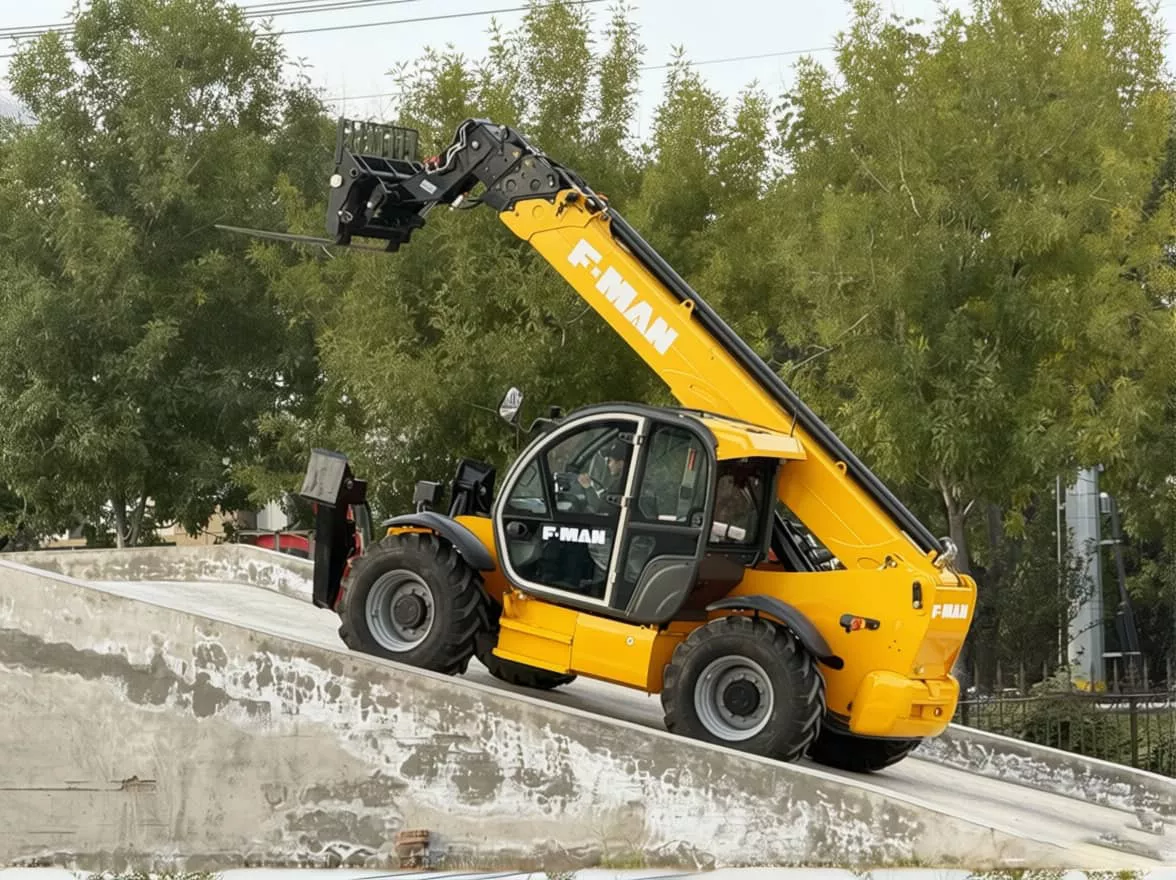
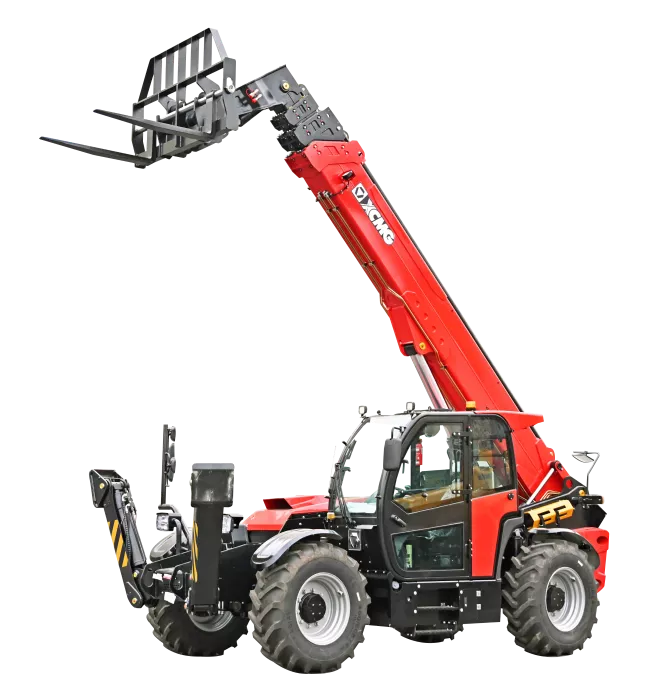
A compact telehandler is a smaller version of the standard telehandler forklift. It has a telescopic boom that extends forward and upward. This lets it lift, move, and place loads at height. The “compact” part means the body is narrow and short. Most units are under 2 meters wide. Some fit through standard doorways.
These machines use forks as the main tool. But you can swap in buckets, grapples, or platforms. The 360 slew telehandler type goes further. It can rotate the whole upper body while the base stays still. This helps a lot in tight yards where turning space is limited.
Key parts of a compact telehandler include:
A diesel engine, usually 50 to 100 horsepower
A hydrostatic or powershift transmission
A telescopic boom with 2 to 3 extension stages
A quick-attach system for tools
Four-wheel drive for rough ground
Why Farms and Small Sites Love Them
Compact telehandlers fill a real gap. Tractors with loaders can’t reach very high. Standard forklifts get stuck in mud. Big telehandlers cost too much and take up too much room. The compact model sits right in the middle.
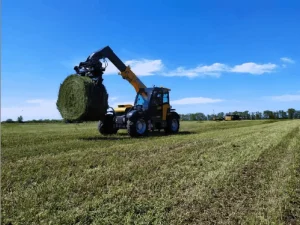
On farms, these machines handle hay, feed, and equipment daily. They move pallets in barns with low roofs. They load trucks in narrow lanes. A telehandler for farm use often runs on simple diesel. It doesn’t need fancy electronics. Farmers like that.
The 360 slew telehandler adds even more value. You can park in one spot and swing the load around. No need to drive back and forth. This saves time and fuel on busy days.
What to Check Before You Buy
Buying a compact telehandler is a big decision. These machines cost real money. New units run from $40,000 to $90,000. Used ones start around $15,000. Here’s what to look at:
Lift height and reach
Check the max lift height. Most compacts reach 4 to 7 meters. Check the forward reach too. You need enough boom length to place loads over walls or into trucks.
Load capacity
Look at the rated load at full extension. A machine might lift 2.5 tons close in. At full reach, that can drop to 1 ton. Match the capacity to your heaviest loads.
Size and weight
Measure your doorways, gates, and storage sheds. The whole point of a compact model is that it fits. Check the width, height, and turning radius.
Engine and hydraulics
Diesel engines are standard. Ask about horsepower and torque. More power helps on slopes. Check the hydraulic flow if you plan to run attachments like buckets or grabs.
Attachment options
A good telehandler uses a quick-attach plate. This lets you swap forks for buckets, bale spikes, or work platforms. More options mean more jobs per machine.
Brand and parts
Stick to brands with dealers near you. XCMG, JCB, Manitou, and CAT all make compact models. Parts and service matter more than fancy features.
Meet MachPlaza
Looking for a compact telehandler for sale? MachPlaza lists machines from top makers. You can compare specs, prices, and delivery terms in one place. They work with sellers across Asia and Europe. This gives buyers more choice and better prices.
A compact telehandler is a smart buy for anyone who works in tight spaces. It lifts higher than a tractor. It fits where big machines can’t. It handles rough ground better than a warehouse forklift. For farms, builders, and small yards, it’s hard to beat.
Pick a model with enough reach and power for your jobs. Check the attachment options. Buy from a source you trust. The right machine will work hard for ten years or more.
FAQs
Q1: What’s the difference between a telehandler and a forklift?
A telehandler has a telescopic boom. A forklift has fixed masts. The boom lets the telehandler reach forward and upward. It also works on rough ground. Forklifts stay on flat floors.
Q2: Can a compact telehandler work indoors?
Yes, if the height fits. Some models are under 2 meters tall with the boom down. Electric models also exist for indoor use. Diesel units need ventilation.
Q3: What does 360 slew mean?
It means the upper body spins while the base stays put. A 360 slew telehandler can pick up a load, swing around, and place it without moving the wheels. This saves space and time.
Q4: How much weight can a compact telehandler lift?
Most lift 1.5 to 3 tons at the base. Capacity drops as the boom extends. Always check the load chart for your exact model.
Q5: Do I need a special license?
Rules vary by country. In many places, a standard forklift license covers telehandlers. In others, you need extra training. Check your local laws before you buy.
Q6: What attachments fit a telehandler?
Common ones include pallet forks, buckets, bale spikes, grapples, and work platforms. A quick-attach plate makes swaps fast and easy.
Q7: How long do these machines last?
With good care, ten to fifteen years. Change the oil on time. Grease the pins. Store it under cover. Simple habits add years to the machine.
Q8: Are Chinese brands reliable?
Yes. XCMG, SANY, and Zoomlion make solid telehandlers. They cost less than European brands. Parts are easy to find. Many buyers choose them for value.