
What Is a Motor Grader? Complete Guide to Uses, Specs & Types

Industry News

2026/07/29
Ever drive on a smooth road and wonder how it got that way? A motor grader did the heavy lifting. This machine shapes, levels, and finishes dirt and gravel surfaces. It also cuts snow, spreads material, and keeps unpaved roads in good shape.
A motor grader has a long body and a blade (called a moldboard) that sits between the front and rear wheels. The blade can tilt, rotate, and move up or down. This lets the operator control the surface with real precision. Most graders run on diesel engines and use hydraulic systems to move the blade.

What Makes a Motor Grader Tick
The moldboard is the heart of the machine. It sits under the frame and cuts, moves, or smooths material. Operators can turn it 360 degrees. They can also tilt it to push material left or right. This matters a lot when you need a flat road or a proper slope for drainage.
The circle is the ring that holds the moldboard. It connects to the drawbar and lets the blade rotate. Hydraulics lift and lower the whole setup. Some graders also have a ripper on the back. The ripper breaks up hard soil or old pavement before the blade does its work.
Tires matter too. Motor graders usually have six wheels. The rear four give power and grip. The front two steer. Some models use all-wheel drive for better traction in mud or loose dirt.
Where Motor Graders Work
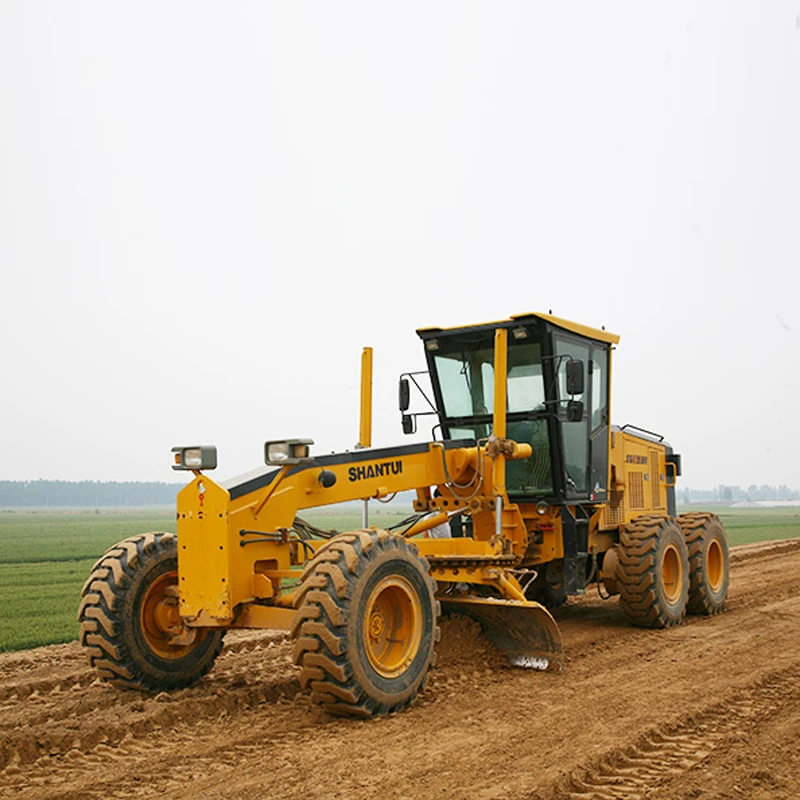
Road building is the main job. Graders level the base before pavers lay asphalt. They also shape shoulders, ditches, and slopes. A good grader operator can create a surface so flat that paving crews barely need to adjust.
Mining sites use big graders to keep haul roads smooth. Rough roads slow down trucks and burn more fuel. A motor grader fixes that. It also clears snow at mines and airports. The blade pushes snow to the side just like it moves dirt.
Farmers and ranchers use smaller graders to maintain gravel paths. Landfills use them to spread and compact waste. Even golf courses use compact graders to shape fairways and greens.
Types of Motor Graders
Rigid frame graders have a fixed chassis. They work well on flat ground and normal roads. Most construction sites use this type. They cost less and need less maintenance.
Articulated graders bend in the middle. This helps them turn tight corners and work on uneven ground. They grip better on slopes. Many mining and forestry crews prefer them.
Compact graders are small and light. They fit in tight spots like parking lots and urban streets. Their blades are shorter, but they still do fine work.
Heavy graders push 400 horsepower or more. They move big volumes fast. Mines and large earthwork projects need this power.
XCMG GR215: A Solid Example
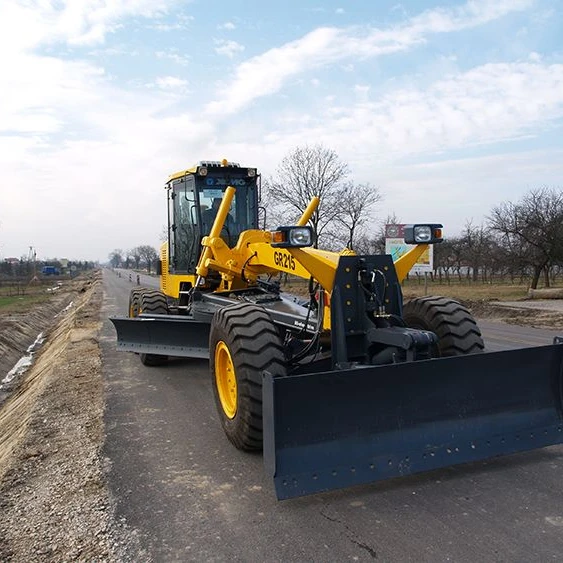
The XCMG GR215 sits in the mid-size range. It packs 215 horsepower from a Cummins 6CTA8.3 engine. That is 160 kW at 2,200 rpm. The machine weighs about 16,500 kg. That weight helps it push through tough material without bouncing.
The blade spans 4,270 mm. That is wide enough for most road jobs. It cuts up to 500 mm deep and lifts 450 mm high. The blade angle ranges from 28 to 70 degrees. The circle spins full circle. The blade can also tilt 90 degrees. These numbers give operators real control.
Forward speeds hit 38 km/h. Reverse goes up to 23 km/h. The turning radius is 7.3 meters. That is tight for a machine this size. The GR215 also offers good tractive force, around 87 to 90 kN. It grips well on loose ground.
XCMG builds the GR215 for road work, site prep, and maintenance. It handles dirt, gravel, and light snow. Many buyers pick it for the balance of power, size, and price.
Key Specs Buyers Check
Horsepower tells you how much muscle the machine has. Small jobs need 100 to 150 HP. Big mines want 300 HP or more. The GR215 at 215 HP fits most general work.
Blade width matters for job speed. A 4.2 meter blade covers more ground than a 3.6 meter blade. But wide blades need more power and space.
Weight affects stability. A heavy grader cuts better and shakes less. But it also burns more fuel and costs more to move.
Hydraulics should respond fast and smooth. Slow hydraulics make fine grading hard. Ask about pump flow and valve quality.
Parts and service are easy to forget. But they matter long-term. XCMG has dealers in many countries. Cummins engines are common. That helps when you need a filter or a repair.
Getting a Good Deal
Start by knowing your job. Do you build roads, maintain them, or work in a mine? Each job needs a different grader size. Do not buy more machine than you need.
Check the hours and service records on used units. A grader with 5,000 hours and good care beats one with 2,000 hours and skipped oil changes.
Test the hydraulics. Move every function. Listen for noise or delay. That tells you about pump health.
Compare brands. XCMG, CAT, Komatsu, and John Deere all make graders. Each has strengths. XCMG often wins on price. CAT and Komatsu may cost more but hold value longer.
Think about attachments. Do you need a ripper? A snow wing? A GPS system for automatic grading? These add cost but boost output.
One More Thing
A motor grader is not just a big machine with a blade. It is a precision tool. A skilled operator can shape a road so well that drivers never think about the work behind it. The XCMG GR215 shows how mid-size power and wide blade coverage meet real job needs. It is strong enough for tough cuts, nimble enough for fine work, and built by a brand that sells worldwide.
FAQs
1. What does a motor grader do?
It levels ground, shapes roads, spreads material, and clears snow. The blade cuts and moves dirt or gravel to make flat surfaces.
2. How is a motor grader different from a bulldozer?
A bulldozer pushes material with a fixed blade in front. A grader has a blade between the wheels that rotates, tilts, and lifts. Graders do fine work. Dozers move bulk material.
3. How long do motor graders last?
Most run 10,000 to 15,000 hours with good care. That is 10 to 15 years for many owners. Regular oil changes and hydraulic checks help a lot.
4. What blade width is best?
It depends on the job. A 4.2 meter blade like the GR215 works for most roads. Tight spaces need smaller blades. Wide blades cover more ground but need more power.
5. Is the XCMG GR215 good for mining?
It works for light mining and haul road maintenance. Big mines with huge trucks may need larger graders with 300+ HP. The GR215 fits smaller sites and road crews.
6. What engine does the GR215 use?
Most units use a Cummins 6CTA8.3 diesel engine. Some newer models use Shangchai engines with similar power. Both are common and easy to service.
7. Can graders work in snow?
Yes. Many operators add snow wings or V-plows. The moldboard pushes snow just like dirt. Airports and municipalities use graders for winter road care.
8. What should I check before buying a used grader?
Check hours, hydraulics, blade wear, circle play, and service records. Drive it. Move all functions. Any delay or noise in the hydraulics is a red flag.
9. Do I need a special license to operate one?
Most countries require a heavy equipment license or certification. Check local rules. Training schools teach blade control, safety, and grading techniques.
10. Where can I find XCMG motor graders for sale?
MachPlaza lists new and used XCMG graders from dealers worldwide. You can compare prices, specs, and shipping options in one place.
