
Self-Loading Concrete Mixer Trucks for Tough Jobsites

Industry News

2026/04/10

Choosing concrete equipment is rarely just about drum size. On many projects, the real issue is how to keep concrete moving when the site is narrow, the road is rough, the batching plant is far away, or the crew is smaller than planned. That is why a self-loading concrete mixer truck has become a practical option for contractors working on roads, drainage, farm infrastructure, foundations, hillside work, and remote civil jobs.
Why more contractors are looking at self-loading concrete mixer trucks
The value of this machine is simple. It combines loading, weighing, mixing, moving, and unloading in one unit. Instead of lining up a loader, a mixer, and a transport vehicle, the same machine can handle the full cycle on site.
For project teams, that changes the daily workflow. A crew can produce fresh concrete close to the pour point, move between work zones, and cut the waiting time that often slows small and mid-sized jobs.
What makes this machine different from a regular mixer truck
A standard mixer truck mainly transports ready-mix from a plant. A self-loading concrete mixer truck is built for on-site concrete mixing. It can pick up aggregate, meter materials, mix the batch, and discharge where needed.
That difference matters most in places like:
village road widening
culvert and ditch construction
low-rise housing foundations
utility trenches
mountain or rural access roads
water conservancy and small bridge works
On these jobs, the distance between material stockpiles and the pour point may change all day. A mobile concrete mixer gives the crew more freedom to adapt without stopping work.
When a self-loading concrete mixer truck makes the most sense
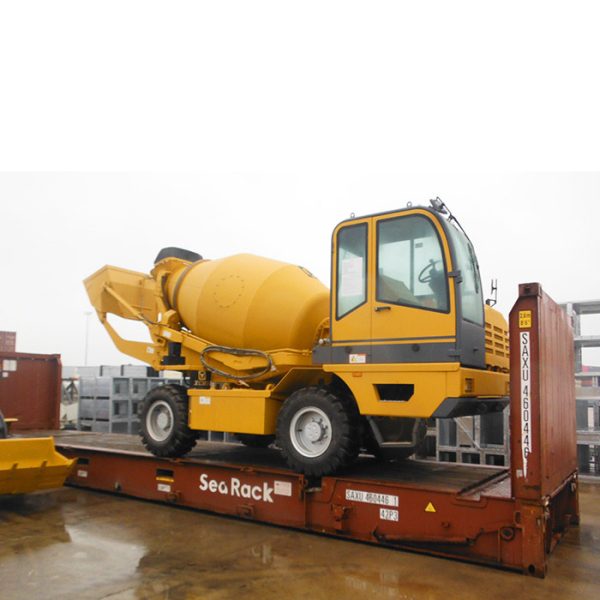
Not every project needs one. But there are situations where this type of machine can save time and reduce friction from the first week.
1. Remote or scattered jobsites
If the worksite is far from a commercial batching plant, transport delays can quickly affect concrete quality and scheduling. A self-loading mixer truck helps the team produce concrete where the work is happening, not miles away.
2. Projects with repeated small pours
Some sites do not need one huge pour. They need many smaller pours across a wide area: shoulder repairs, drainage channels, retaining footings, fence bases, curb sections, or slab patches. In that case, a compact concrete mixer machine is often more practical than sending full-size ready-mix trucks back and forth.
3. Sites with poor road conditions
Mud, steep access roads, temporary haul roads, and uneven ground all add risk and delay. Contractors usually pay close attention to drive type, ground clearance, turning radius, and gradeability because these points decide whether the machine works smoothly or becomes a daily problem.
4. Crews under labor pressure
Labor is still one of the biggest operational headaches on many projects. A self-loading concrete truck mixer reduces the need to coordinate several machines and several operators for one batch cycle. That can be useful when skilled operators are hard to schedule.
The practical benefits that matter on site
A lot of product talks about features. Buyers usually care more about what those features change in real work.
Faster batching close to the pour point
Concrete can be mixed close to where it is placed. That helps on jobs where the crew keeps moving along the alignment, such as rural road paving or ditch casting.
Better control over batch timing
Instead of waiting for a truck to arrive from a distant plant, the operator can mix according to the pace of the crew. That reduces idle time at the formwork.
Less equipment coordination
One machine can cover several steps in the process. Fewer moving parts in the plan often means fewer delays in the field.
Useful on small and medium daily volumes
Many contractors do not need the output of a large batching line every day. They need steady, repeatable supply for practical jobsite volumes.
Here is a simple comparison:
| Work method | Typical setup | Best fit |
| Plant supply + regular mixer truck | batching plant, transport truck, site coordination | large urban pours with stable road access |
| On-site mixer + loader + transport support | several machines, more crew coordination | fixed work zones with available labor |
| Self-loading concrete mixer truck | one machine for loading, mixing, moving, unloading | remote, narrow, shifting, or mid-volume jobs |
What buyers should check before choosing a machine
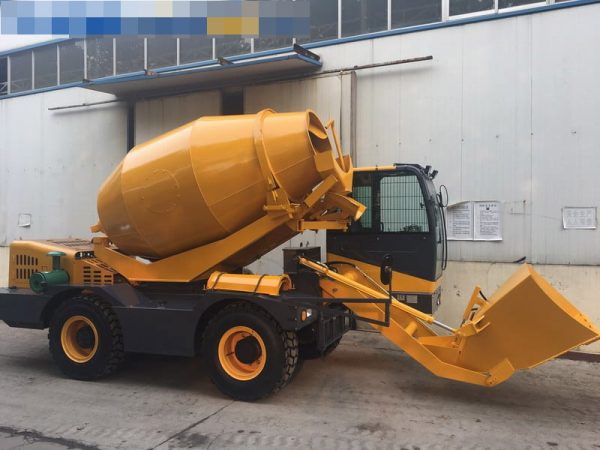
A good buying decision starts with work conditions, not brochures. The wrong machine can look attractive on paper and still underperform in the field.
Output that matches the real daily plan
The first question is not “What is the biggest machine available?” It is “How much fresh concrete is needed per shift, and in how many separate pours?”
For example, a contractor building drainage lines and small slab sections may need steady batches during the day, not one oversized load. In that case, a compact self-loading concrete mixer can be a better match than heavier equipment with higher purchase and operating costs.
Drum and bucket capacity
The drum size affects batch volume, while bucket capacity affects how quickly materials are loaded. Both influence cycle time. Buyers should look at the whole process, not only one headline number.
Mobility on the actual site
A machine may look fine in a yard test and still struggle on a hilly or tight site. Practical questions include:
- Can it turn easily near stockpiles and formwork?
- Can it travel safely between work fronts?
- Can it handle muddy or uneven ground after rain?
- Is it suitable for ramps, slopes, and temporary access roads?
Weighing and mix consistency
A weighing system matters because wasted material adds up quickly. It also helps when the project demands more stable mix control across repeated batches. For footings, channels, pavement sections, and precast support work, consistency is often more important than peak output.
Service, spare parts, and operator support
This point is often ignored until downtime starts. A self-loading concrete mixer truck supplier should be able to support technical questions, spare parts ordering, and troubleshooting after delivery. For many overseas buyers, this matters almost as much as the machine itself.
Common project scenarios and the right fit
The table below shows how buyers often think about applications in real life.
| Project scenario | What the contractor usually needs | Why a self-loading concrete mixer truck fits |
| Rural road and shoulder works | frequent moves, repeated small pours | mobile batching close to the work line |
| Drainage channels and culverts | narrow space, changing pour points | easy repositioning and on-site mixing |
| Farm and community infrastructure | remote location, limited support equipment | fewer machines needed on site |
| Low-rise building foundations | controlled fresh batches, flexible timing | concrete can be mixed when the crew is ready |
| Water conservancy or hillside jobs | rough access roads, variable terrain | better jobsite independence |
Mistakes that often lead to poor buying decisions
This part is easy to overlook because buyers are usually comparing prices, lead times, and photos. But several mistakes appear again and again.
Buying for the rare peak day
Some contractors choose a machine for the biggest pour of the year. Then they carry extra cost for the other eleven months. The better approach is to size the machine for the normal workload and project mix.
Focusing only on output
Output matters, but so do turning radius, drive layout, maintenance access, bucket performance, and operator visibility. In tough environments, those details shape daily productivity more than one headline figure.
Ignoring the material flow on site
The machine should match the way sand, stone, cement, and water are stored and moved. If stockpiles are badly placed or loading access is tight, even a strong machine can lose time every cycle.
Treating after-sales support as a side issue
Concrete work does not wait. If a machine is idle during a critical pour schedule, the cost goes beyond repair. That is why many buyers prefer a supplier that can support spare parts, technical documents, and basic service guidance after purchase.
How to judge a self-loading concrete mixer truck supplier
Price will always matter. But supplier quality shows up in the details before and after the sale.
A dependable supplier usually offers:
- clear product categories and easy inquiry paths
- detailed specifications rather than vague descriptions
- realistic delivery communication
- spare parts support
- technical documents and operating guidance
- responsive contact channels for overseas buyers
These points may sound basic, yet they often decide whether a machine keeps working smoothly across its first year in the field.
About MachPlaza as a self-loading concrete mixer truck supplier
People who buy machines from China often turn to MachPlaza. It works as a construction machinery exporter. The company has a wide selection of equipment. It also has a special focus on concrete machinery.
The website shows many kinds of products. Buyers can ask questions right there. It lists concrete equipment too. This helps them compare choices all in one place. They avoid jumping to different sellers that do not connect.
MachPlaza stresses good customer service. It has fair prices. It offers help with delivery. It provides after-sales support as well. This support includes online help. It comes with video guides. It also sets up service in other countries.
This whole mix helps contractors and equipment distributors. It is useful when they pick a machine. They also need strong support after the purchase.
Conclusion
A self-loading concrete mixer truck is not just a smaller version of a regular mixer truck. It serves as a new kind of solution on the job site.
Contractors often face remote areas. They deal with narrow access roads. Or they work across spread-out fronts. This truck gives them more control. It handles batching. It manages transport. And it does placement well.
The best choice comes from fitting the machine to the real site. It should match the daily pour plan. It needs to suit the ground. And it requires good support after delivery.
When these things fit together, the work becomes smoother. There are fewer delays. And the concrete supply process turns more practical.
To help you decide, here are answers to some common questions about self-loading concrete mixer trucks.
FAQs
What is a self-loading concrete mixer truck used for?
A self-loading concrete mixer truck loads raw materials. It mixes concrete on the spot. It moves around the site. And it unloads fresh concrete where you need it.
It works especially well for road work. It helps with trenching. It suits foundations. It fits drainage projects. And it is great for remote construction sites.
Is a self-loading concrete mixer better than a regular mixer truck?
It depends on the project.
A regular mixer truck does better when ready-mix supply is steady. Road access needs to be easy too.
A self-loading concrete mixer is often the better pick. It excels at on-site concrete mixing. It handles small to medium pours. It shines on jobsites where flexibility counts more than long-distance transport.
What should buyers check before choosing a self-loading concrete mixer supplier?
Buyers should check several key points before they choose a supplier.
They look at the output level. They check drum and bucket capacity. They test mobility. They review the weighing system. They want good spare parts access. They need solid technical support. And they care about clear delivery communication.
A reliable self-loading concrete mixer truck supplier supports the machine after the sale. It does not just ship the truck.
Can a self-loading concrete mixer truck work in rough terrain?
Many units in this group get chosen for rough or uneven jobsites. They are built for strong mobility. And they offer site independence.
Buyers should still check the turning radius. They look at drive type. They review gradeability. And they test travel stability. They must match these to the real road and ground conditions of their project.
Is a self-loading concrete mixer truck suitable for small contractors?
Yes.
Many small and mid-sized contractors see it as a practical choice. It reduces the need for multiple machines. It keeps concrete production close to the work area.
This helps a lot when labor is short. Time feels tight. And transport access is under pressure.
