
Key Specifications to Compare Before Buying a Telehandler

Industry News

2026/05/03

Telehandlers are powerful machines. They lift materials, reach high places, and move heavy loads. Construction sites use them for framing and material handling. Wareplaces rely on them for stacking. Farms use them for bale handling and feed loading. But choosing the right telehandler is not simple. Many specifications matter. Some buyers focus only on lift height. Others focus only on price. Neither approach works well. The wrong telehandler either lacks power for the job or costs more than needed. This guide walks through all key specifications. It helps you compare models and pick the right one.
—
Lift Capacity and Lift Height
Maximum Lift Capacity
This specification tells you how much weight the machine can lift. Small telehandlers handle 2,500 to 3,000 kilograms. Medium models lift 4,000 kilograms. Heavy-duty units reach 6,000 kilograms or more. The number looks simple but it hides complexity. Some machines show high lift capacity but only when the boom is fully retracted. At full reach, the capacity drops significantly. Always check the capacity at maximum reach, not just the peak number. For construction work, 3,000 to 4,000 kilograms covers most needs. For heavy industrial work, consider 5,000 kilograms or more.
Maximum Lift Height
Standard telehandlers reach 10 to 14 meters. High-reach models go up to 18 or 20 meters. Taller reach means higher cost. Do not pay for extra height unless your job needs it. Most building construction works well with 12 to 14 meters. This reaches typical roof heights. Higher reach matters for steel frame buildings or multi-story construction. Remember that lifting capacity decreases as the boom extends upward. A machine lifting 3,000 kilograms at ground level might only handle 1,500 kilograms at full height. Consider your actual load at the actual height.
—
Engine and Transmission
Engine Power
Diesel engines range from 70 to 150 horsepower. More horsepower handles heavier loads and steeper terrain. It also affects how fast the boom lifts. Hilly job sites need more power. Flat sites can use smaller engines. Larger engines also mean better hydraulic flow. This matters when running attachments like grapples or pumps. Consider the typical terrain on your job sites. A powerful engine adds cost but prevents stalls and slow operation.
Transmission Type
Powershift transmissions shift smoothly without stopping. This matters for continuous lifting work. Hydrostatic drives offer precise control for placement work. Choose based on how the operator works and what the job demands. Some models offer 4-wheel drive for muddy or uneven ground. Others are 2-wheel drive only. If your sites have rough conditions, 4-wheel drive matters. It prevents getting stuck and improves productivity.
Frame and Dimensions
Overall Dimensions
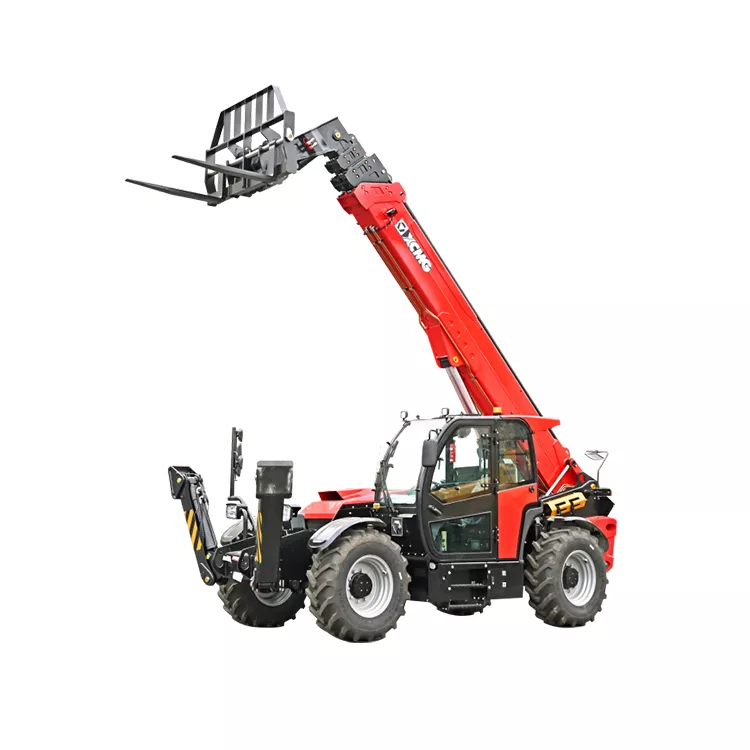
Check the width and height before buying. Smaller machines fit through narrow gates and low structures. Large models offer more power but need more space. Measure your job site entrances first. Do not buy a machine that cannot fit through the door. Compact models work well for indoor construction or tight sites. Standard models work better for open sites with heavy loads.
Wheelbase and Turning Radius
A short wheelbase gives a tight turning radius. This matters in confined spaces like warehouses or tight job sites. But a longer wheelbase provides stability when lifting high. It also affects ride quality. Consider the typical work area. Tight spaces need short turning radius. Open sites can handle longer wheelbase.
Tire Types
Pneumatic tires work well on rough ground. They absorb shock and provide good traction. Solid tires resist punctures from debris. They work well in junkyards or demolition sites. Foam-filled tires balance both needs. They resist punctures but provide some cushion. Choose based on the ground conditions at your typical sites.
—
Attachments and Cab Features
Standard Attachments
Most telehandlers come with forks. Other common attachments include buckets, hooks, truss booms, and work platforms. Check if the attachments you need are included or cost extra. Quick-attach systems let operators change tools in minutes. This matters for jobs requiring multiple attachment changes. Some manufacturers offer more attachment options. Consider what attachments your work requires and check compatibility.
Cab and Controls
Modern cabs offer good visibility. Large windows reduce blind spots. Climate control keeps operators comfortable in extreme weather. Adjustable seats reduce fatigue for long shifts. Check the control layout. Joysticks should feel natural. Gauges should be easy to read. Ergonomic controls matter for operator productivity. Better cabs also mean better safety records.
—
Conclusion
Comparing specifications takes time. But it prevents costly mistakes. Match the machine to your actual job needs. Do not pay for extra height if you only need 10 meters. Do not skimp on power if you work on steep hills. Consider all factors together. The cheapest option often costs more in the long run. The most powerful option may be overkill for your work. Take time to compare and choose wisely.
Need to compare models? Visit MachPlaza. They list telehandlers from XCMG, SANY, Liugong, and other top brands. Browse machplaza.com to find specifications and request quotes. Their team can help you match specs to your job needs.
—
FAQs
1. What is the average lifespan of a telehandler?
A: With proper maintenance, 8,000 to 12,000 hours is typical. Some reach 15,000 hours with excellent care.
2. What lift capacity do I need for construction work?
A: 3,000 to 4,000 kilograms covers most construction jobs. Consider your heaviest loads.
3. How high do most construction jobs need to reach?
A: 12 to 14 meters handles most residential and commercial building sites.
4. Are telehandlers expensive to maintain?
A: Maintenance costs are moderate. Regular hydraulic service, filter changes, and basic upkeep keep them running well.
5. Can I use telehandlers on rough or muddy ground?
A: Yes, with 4-wheel drive and appropriate tires. Check ground conditions before selecting.
