
How to Choose an All Terrain Crane for the Right Project

Industry News

2026/04/30

An all terrain crane sits in a useful middle ground. It can travel on public roads between jobs, then work on mixed ground conditions once it reaches site. That mix of mobility and lifting strength is why contractors keep choosing it for bridge works, plant maintenance, urban construction, energy jobs, and large infrastructure packages. On MachPlaza, all terrain crane is one of the main crane categories, alongside truck crane, rough terrain crane, and crawler crane, which reflects how often buyers compare these machines during procurement.
For buyers looking at a 40 ton all terrain crane, a 100 ton all terrain crane, or even a 200 ton all terrain crane, the real question is not simply how many tons the crane can lift. The real question is which machine fits the lift plan, site access, road transfer needs, setup time, and daily workload. A crane that is too small creates delays. A crane that is too large can add transport cost, setup burden, and wasted capacity.
What makes an all terrain crane different?
Before choosing by capacity, it helps to place the all terrain crane in the wider lifting equipment landscape.
An all terrain crane is designed to combine highway travel with off-road jobsite ability. Compared with a rough terrain crane, it is better suited to projects that require frequent road moves. Compared with a truck crane, it usually offers stronger performance for harder ground conditions and more demanding lift charts. Compared with a crawler crane, it is faster to transfer between sites and usually easier to deploy for short or medium-duration jobs. Industry guides commonly frame it as the go-to option where mobility and lifting range both matter.
Where an all terrain crane is usually the better choice
Typical use cases include:
- urban construction with repeated road travel between jobs
- bridge construction with medium to heavy components
- industrial shutdown work where setup speed matters
- infrastructure jobs spread across multiple locations
- energy and utility work with uneven or restricted access
That spread of use cases explains why buyers often start with a broad search such as “best all terrain crane for construction project” and only narrow down the tonnage later.
The key factors that actually decide crane selection
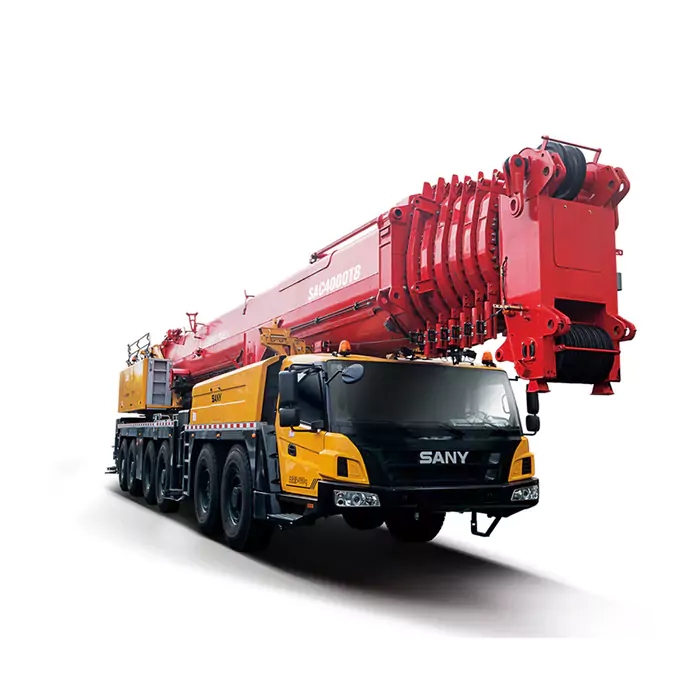
Capacity matters, but it is only the first screen. The best all terrain crane selection guide always comes back to job conditions.
Lifting capacity is only the starting point
A 100 ton all terrain crane does not lift 100 tons at every radius. The same applies to a 40 ton all terrain crane or a 200 ton all terrain crane. Actual lifting performance changes with boom length, working radius, jib use, counterweight, outrigger position, and site setup. That is why the load chart matters more than the headline tonnage when the lift becomes complex.
Working radius often decides the machine
Many poor crane choices come from looking at weight only. A plant skid weighing 18 tons may look easy on paper. But if it has to be placed 24 meters away from the crane centerline, the required machine can jump sharply in size. For bridge beams, rooftop equipment, and structural steel near existing buildings, radius becomes a bigger constraint than raw load weight.
Boom length and lifting height shape project fit
When selecting an all terrain crane for bridge construction or industrial plant installation, boom system matters. A short lift at low height is one thing. A long pick over pipe racks, traffic lanes, or temporary works is another. On MachPlaza product pages, all terrain crane listings commonly show buyers the practical data they compare first: maximum lifting capacity, lifting height, and boom-related parameters.
Site access and ground conditions should never be ignored
A crane that looks perfect on the chart can still fail the project if it cannot reach the working position. Narrow urban roads, soft shoulders, sloped access tracks, and limited outrigger room change everything. This is where the all terrain crane keeps its value. It is built for mixed conditions, but that does not remove the need to check turning space, axle load restrictions, approach path, and level setup area.
Transfer speed and setup time affect real cost
On projects with frequent moves, transport efficiency is not a side issue. It is a cost issue. A crane that can finish one lift, stow quickly, move a short distance, and start again the same day often beats a larger but slower alternative. Industry comparisons consistently point to this mobility advantage as one of the biggest reasons contractors choose all terrain cranes over crawler cranes for shorter work cycles.
Choosing by capacity: from 40T to 200T
Capacity bands are still useful when tied to real work. The table below gives a practical starting point.
| Capacity band | Best fit projects | Main strength | Main limit |
| 40T | municipal work, light steel, MEP installation | compact, easier access, lower operating cost | limited radius on heavier picks |
| 60T | general construction, precast, factory work | balanced versatility | may struggle on longer-radius lifts |
| 100T | bridges, industrial installation, large structural work | wider project range | higher transport and setup demands |
| 160T | petrochemical, energy, heavy precast | better reach and heavier picks | needs more room and planning |
| 200T | infrastructure, large modules, demanding site lifts | strong capacity for complex jobs | higher cost and larger footprint |
40 ton all terrain crane: best for tight urban work
A 40 ton all terrain crane usually fits projects where access is restricted and daily lifts are moderate. Examples include HVAC placement beside finished buildings, utility works in dense streets, low-rise structural steel, and municipal infrastructure repairs. It is also a sensible option when road travel between small jobs is frequent.
60 ton all terrain crane: the practical generalist
For many contractors, this is where versatility starts to pay off. A 60 ton all terrain crane can handle a wider spread of civil and commercial work without becoming too costly to deploy. It often fits medium precast elements, workshop installation, warehouse steel, and factory shutdown maintenance.
100 ton all terrain crane: strong fit for bridge and plant work
This is often the point where the machine begins to cover more serious bridge construction and industrial plant installation. A 100 ton all terrain crane can make sense for girder accessories, heavier process equipment, larger structural components, and repeated lifts at moderate radius. For firms that work across several project types, this band often becomes the most useful middle ground.
160 ton all terrain crane: built for harder lifts
When components get heavier and placement gets more demanding, a 160 ton all terrain crane becomes relevant. This band fits petrochemical maintenance, energy projects, heavy precast, and larger steel erection where longer reach is needed. It is not only about weight. It is about handling the same weight farther out and higher up.
200 ton all terrain crane: for major infrastructure and high-demand jobs
A 200 ton all terrain crane is usually chosen where the project scale justifies it. Bridge sections, large industrial modules, utility structures, and demanding infrastructure packages are typical examples. For energy work and dispersed infrastructure packages, the value comes from combining strong lift capability with road mobility rather than bringing in a larger crawler system for every task.
Choosing by project type
Capacity bands help, but project type gives the clearer answer.
Urban construction and municipal jobs
Urban projects usually reward compact setup, road mobility, and short setup time. Typical lifts include rooftop units, curtain wall packs, rebar cages, pipe sections, and lighting structures. Here, 40T to 60T all terrain cranes often make more sense than bigger machines.
Bridge construction
Bridge jobs tend to push both radius and stability. Even when the piece weight is manageable, the lift geometry can drive machine size upward. A 100T or 160T all terrain crane is often considered when there is a mix of access difficulty, staged lifting, and repeated picks over obstructions.
Industrial plant and refinery maintenance
Shutdown work leaves little room for delay. The crane needs to arrive on schedule, set up in tight spaces, and place equipment cleanly. That is why all terrain crane options are frequently used for vessel components, pumps, heat exchangers, and pipe modules. Speed matters here almost as much as chart performance.
Infrastructure and energy projects
Large infrastructure jobs often spread over long corridors or multiple zones. One day may involve culvert placement, the next day steelwork, and the next heavy utility components. In that setting, 160T to 200T all terrain crane options can pay off when the lifts are varied and transfer time matters.
Common mistakes that lead to the wrong crane choice
Even experienced buyers can make avoidable mistakes. The most common ones are simple:
- choosing by headline tonnage instead of load chart
- ignoring lifting radius and hook height
- underestimating outrigger space
- forgetting road restrictions and travel route limits
- selecting an oversized crane for routine lifts
- treating mixed projects as if one crane will fit every task
A useful rule is to match the crane to the hardest regular lift, not the rarest extreme lift.
MachPlaza as an all terrain crane supplier
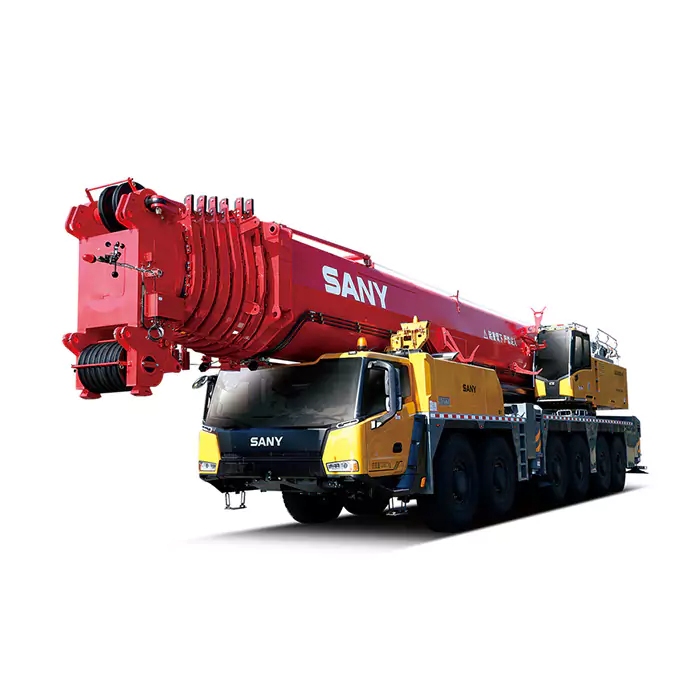
For buyers sourcing equipment for export projects or fleet expansion, supplier depth matters as much as the crane itself. MachPlaza works across a broad construction machinery range that includes cranes, excavators, loaders, road equipment, bridge machinery, spare parts, and related support items. Within cranes, the platform offers a substantial all terrain crane selection and separates it clearly from truck crane, rough terrain crane, crawler crane, and other lifting categories, making comparison easier during procurement.
As an all terrain crane supplier, MachPlaza also brings the traits that serious equipment buyers usually look for in cross-border procurement: export experience, coordinated logistics, product and spare-parts support, and the ability to provide project-oriented solutions rather than a single machine in isolation. The company presents itself as a long-term exporter of construction machinery with customer service, pricing, delivery coordination, and lifecycle service as core parts of its offer.
Conclusion
The right all terrain crane is the one that matches the job, not the one with the biggest number on the brochure. A 40 ton all terrain crane may be the smartest choice for dense city access and routine lifts. A 100 ton all terrain crane may be the better fit for mixed bridge and industrial work. A 200 ton all terrain crane earns its place when radius, component size, and project scale all move upward.
For procurement teams, the fastest way to narrow the choice is simple: start with the hardest lift, check the real working radius, confirm site access, and then weigh transfer efficiency against total job cost. That approach usually leads to a better machine decision and a smoother project.
FAQs
What is the main advantage of an all terrain crane?
The main advantage of an all terrain crane is that it combines road travel with jobsite mobility. That makes it useful for contractors who move between projects and still need strong lifting performance on mixed ground conditions.
How to choose the right all terrain crane for a bridge project?
Start with the heaviest pick, then check the working radius, lifting height, and available setup space. For bridge construction, radius and access often matter more than the simple weight of the component.
Is a 100 ton all terrain crane enough for industrial installation?
Sometimes yes, sometimes no. A 100 ton all terrain crane can suit many plant lifts, but the answer depends on radius, boom configuration, counterweight, and site restrictions. The load chart decides the real answer, not the class name.
Should a contractor choose an all terrain crane or a rough terrain crane?
An all terrain crane is usually the better choice when public-road travel and multi-site work are part of the project. A rough terrain crane often fits enclosed sites and shorter off-road moves better.
