
Cut Rough Terrain Crane Fuel and Maintenance Costs

Industry News

2026/06/23

Rough terrain cranes are highly valuable on construction sites but can become very expensive if the consumption of fuel, wear parts, tire damage and down time are not kept under control. On construction sites with muddy access roads, on bridge construction sites, on plant installation sites, on mining sites and at remote infrastructure construction sites the rough terrain crane is often in operation for a long time. It then performs many short trips on soft ground, has a small working radius and has to lift at precise times. Moreover, the loads are constantly changing.
Don’t mistake lower costs for lower service quality. Lower costs stem from choosing the right machines for the work at hand, developing work routines that consist of consistent, repetitive actions, finding and fixing small problems before they become big, and ordering spare parts in advance of failures that could halt work. This guide provides advice to contractors, to the managers of fleets of cranes, and to those buying new cranes on how to lower the fuel consumption and the costs of maintenance of rough terrain cranes without jeopardizing safety or productivity.
Why Operating Cost Matters More Than Purchase Price
The Purchase Price to compare is straight forward. The Real Operating Cost is hidden in the hours the crane is working. There is Fuel, hydraulic oil, filters, tires, wire rope, pins, seals, emergency repair etc. and of course the idle labor to name a few factors that drive up the cost of every lift.
Fuel Is Only One Part of the Cost
Most people notice their fuel bills, but they can be easily obscured from view. It is easy to forget that a poorly maintained crane will not only increase its fuel bill, but it will also rapidly wear out the pumps, hoses, brakes and tires. Small problems such as a hydraulic leak, a blocked air filter or an underinflated tire may not cause any immediate problems but they will certainly increase a machine’s daily fuel consumption and repair costs in the long run.
A simple cost view helps teams understand the complete picture.
| Cost Item | What to Track | Why It Matters |
| Fuel | Liters per hour, idle time, travel distance | Shows whether operating habits or machine condition are wasting fuel |
| Maintenance | Filters, oil, grease, labor hours | Keeps service work planned instead of emergency-based |
| Tires | Pressure, cuts, uneven wear | Rough ground can turn tire damage into a major cost |
| Hydraulic system | Oil condition, leaks, temperature, response speed | Poor hydraulic efficiency raises fuel use and repair risk |
| Downtime | Hours stopped, delayed lifts, waiting crews | Often costs more than the repair itself |
Downtime Can Cost More Than Repair
Failure of a crane during a lift can cause delay to steel work, concrete, plant installation and transport loading for crew and trucks alike, with resulting loss of time and idling of other plant and equipment. Remote sites suffer even more severely due to high cost of shipment of failed parts from a distance. Thus the usual view of the role of crane preventative maintenance as a shop activity as opposed to a production tool, is an expensive one.
How Can Operators Reduce Rough Terrain Crane Fuel Consumption?
Day-to-day operation is crucial to save fuel. Two cranes of identical engine power can have completely different specific fuel consumption depending on the efficient operation. One crane is operated in a professional manner, the other stands idle for hours or is frequently used for short transports.
Cut Unnecessary Idling
One of the most basic costs to cut is idle time. On most sites, the crane is left idling while riggers are slinging up, waiting for the trucks to arrive, or for material to be moved into position. While there is inevitably some idle time, it should be managed.
A good site team sets out clear procedures for start-up, waiting time and de-commissioning. Planning of lift signals, setting up of rigging, and supply of necessary materials for the crane is done prior to the crane starting work. By reducing idling time the fuel consumption and wear and tear on the engine can be decreased.
Use Smooth Travel and Lifting Movements
Aggressive maneuvers such as hard acceleration, hard braking, fast slewing and frequent high-rpm operation increase fuel consumption. They also increase wear on tires, brakes, driveline and hydraulic components.
A steady operator is not a slow operator. In fact, a smooth and controlled operator will often complete a cycle of work in less time than an operator who is using abrupt control movements. This is because the load will swing less, the hook will settle more quickly, and the crane will require fewer corrections.
Plan the Lift Path First
It costs something to move a rough terrain crane from one location to another on the construction site. Each short move is using fuel and wearing out tires. For each repositioning, the crane’s outriggers will again have to be set up for lifting. It is best to set up the material, trucks and other items for rigging at the start of the lifting so as to avoid as much repositioning as possible.
One well-planned crane position for the work of bridge construction, plant maintenance and precast installation can save hours of work in a week of lifting.
Daily Inspection Checklist for Lower Maintenance Cost
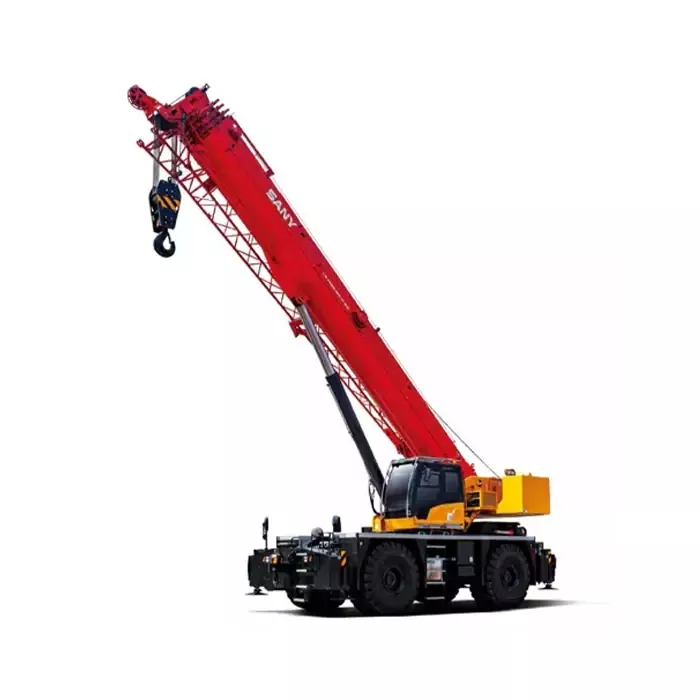
A rough terrain crane maintenance checklist is most useful if it is brief enough to be used every shift, and detailed enough to pick up early warning signs of failure.
Check Fluids Before Each Shift
Check the levels of engine oil, coolant, hydraulic oil, transmission oil and fuel before starting any heavy work. Low levels, dirty or cloudy oil, burning smells and dirt or contamination in the oil can indicate serious problems.
A simple 2 minute check could have prevented the pump failure, overheating and/or engine shutdown.
Look for Hydraulic Leaks and Slow Response
The maintenance of a hydraulic system is a major component of controlling the costs of a crane. Check for leaks or wear of all hoses, cylinders, fittings, etc. including any cracks in valves or seals. Monitor the overall “feel” of the machine for indications of malfunction.
Warning signs include:
- Slow boom extension
- Weak lifting response
- Uneven outrigger movement
- Excessive hydraulic heat
- Unusual pump noise
- Jerky slewing or winch action
Small hydraulic problems should not be put off until the next major service. A inexpensive hose or seal problem can become an expensive pump or valve problem.
Inspect Tires on Rough Ground
A common error in tire maintenance for cranes traveling on rough terrain is to overlook the damage until it is too late. Check the tire pressure, sidewall cuts and scrapes for signs of irreparable damage, embedded stones, uneven wear and loose wheel nuts.
Soft ground and sharp gravel do not a good mix make. Low tire pressure on a crane causes high rolling resistance and excessive fuel consumption. Higher pressure has the opposite effect – it prevents good grip but increases impact damage. Obviously, you need to read the manual for the particular crane in question and compare with the actual site situation.
Protect the Hydraulic System
The hydraulic system on your engine converts your power into motion to lift, boom, slewing and deploy your outriggers. If it gets dirty, hot or leaking, the whole machine will suffer.
Keep Oil Clean
Oil is oil and there is oil that is better for you to use in your hydraulic system than others. There are many types of oil and they all have their own uses. Hydraulic oil can be very expensive. Don’t let it damage your pumps, valves, seals and cylinders by becoming contaminated with dirt. It can get in by way of a failed seal but also by poor storage, carelessly refilling the tank, or by using old filters. The art of clean oil handling is a simple one. It requires the use of sealed containers, clean funnels, the correct oil for the job, and change of filters on a regular basis.
Watch Heat and Pressure
Too much heat on any component usually means that component has been forced to do to much work. Dirty oil, plugged filters, wrong oil viscosity, worn oil pumps, plugged oil coolers and extended operation in severe service are some causes.
High temperatures greatly reduce the life of seals and can enable minor problems to develop very rapidly. Abnormal temperature warnings, loss of packer movement and abnormal noise should be reported to the well control team immediately.
Reduce Tire and Ground-Related Damage
Rough terrain cranes are designed for work on poor ground, but that doesn’t mean every site path is suitable for your crane. Not managing your site properly can burn a lot of fuel running back and forth, and also can cause serious damage to tires, axles, steering components, and even the outriggers.
Choose Better Travel Routes
A short route is not necessarily a cost effective route. The ground may be deep mud with sharp rocks, narrow soft shoulders or steep, sharp turns that could incur more costs in the long run than traveling along a slightly longer but more stable route. It is good practice for the site manager to clearly denote the crane routes where ground bearing capacity has been checked to ensure safe operation and to minimize tire damage.
Use Outrigger Pads Correctly
The outrigger pads help to distribute the weight and improve stability on soft or uneven surfaces and also help to stop the crane from twisting. Poor set up of the crane can result in the load not being distributed evenly across all points which can result in slow lift, further repositioning of the crane and could also cause damage to the crane.
Train Operators to Control Cost
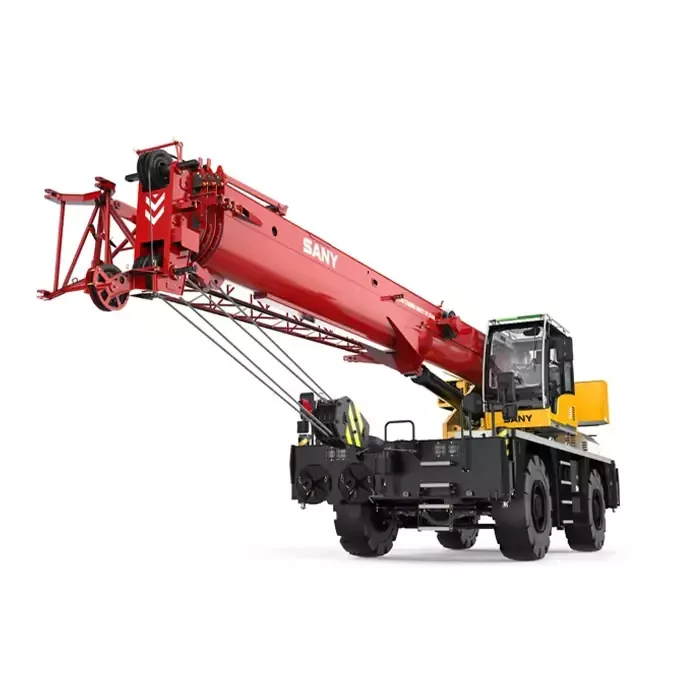
The operator skill level will have an effect on the amount of fuel used to operate a rough terrain crane as well as the cost of repairs and jobsite safety. Training should not be limited to explaining the crane controls. Also training the operator on good site judgment, adequate communication with the rest of the crew, and early reporting of any problems that may occur with the crane will also be beneficial.
Better Communication Cuts Idle Time
Many hours of lost fuel power occur as the crane simply waits for a go ahead. Utilize clear signals, prepared and ready rigging, ready loads and planned locations for the trucks to be able to decrease idle time and thus shorten the time required for all lifting tasks.
Good Operators Notice Small Problems Early
Even experienced crane operators can develop a sense of whether something is not quite right with their crane. Slowly winding in a winch, slewing unevenly, a hot hydraulic system, unusual engine sounds etc. should be reported before it fails during a lift.
MachPlaza as a Rough Terrain Crane Supplier
MachPlaza is very happy to serve global buyers who are looking for construction equipment such as rough terrain cranes which can move off road to perform lifts for construction of infrastructure, industrial plants and other projects. The web site contains large resources of construction machinery including new and used complete machines as well as new and used spare parts for old machines. This is very important for buyers who focus on life cost of use rather than low purchase price.
MachPlaza as a supplier of Rough Terrain Cranes offers its customers a choice of different crane types and models of various capacity as well as other machinery used in construction. That enables construction companies to compare offered products with other ones of similar application area, required lifting height, maneuverability on site, availability of spare parts and others. For foreign customers the value of MachPlaza as a supplier is not only in finding a suitable machine. It is also in getting clear information on a product chosen, in assistance with export from a country of origin as well as in practical communication till the moment when a machine is delivered to a site where it will be used.
Conclusion
Controlling rough terrain crane costs on a daily basis to reduce their fuel costs and their maintenance costs is a job that can be managed on a daily basis. The key to controlling costs is to select the correct crane for the job in question and to create a realistic lift plan. It is also very important to manage and operate the crane on a consistent basis on a daily basis and to check it on a daily basis for any damage that may have occurred as a result of an accident or other event. In addition to these basic management responsibilities, the following are several other key factors that must be managed on a daily basis in order to keep costs down: maintain the hydraulic oil in good condition, maintain the correct amount of air in the tires, perform service as required, provide the operator with training and ensure that the required spare parts are available.
While the lowest-cost crane to purchase is not necessarily the best value for the dollar, it is the piece of equipment that will run safely and cost only reasonably for the fuel that it burns. Furthermore, ideally such equipment will not experience repetitive down time and the buyer will be able to obtain parts and service as needed throughout the working life of the machine. To service projects on time, and to safeguard the asset value of equipment, contractors and equipment fleet owners need to consider this approach when choosing the equipment that is optimal for their requirements.
FAQs
1. How can I reduce fuel consumption of a rough terrain crane?
Reduce idle time, plan the position for lifting loads ahead of time, set up the best travel route to the lift site, operate the machine with smooth control, ensure the correct tire pressure is set for the machine, and keep the air filters and hydraulic oil in good condition. Doing these things will save fuel for rough terrain cranes without affecting the pace of work.
2. What should be included in a rough terrain crane daily inspection?
A daily check must cover Engine Oil level, Coolant level, Hydraulic Fluid level, Tire tread depth and damage, Hydraulic Hose damage, Outrigger damage and correct extension, Wire Rope condition, Hook condition, Brake operation, Lighting and Alarms, and any damage or wear to the Structural Components. Any signs of leakage, slow operation, cracking or unusual noise should be reported before commencing lifting work.
3. Why does rough terrain crane maintenance cost rise over time?
It’s normal for the maintenance costs of the construction equipment to increase over time. This can be due to the longer working hours, working on rough ground, bad lubrication, dirty hydraulic oil, tire damage, delayed replacement of filters and many other reasons. Maintaining proper records will help to determine whether the cost increase is part of normal aging process or if the increase is caused by the poor site practices.
4. Is preventive maintenance cheaper than emergency repair?
Most often, yes. By replacing low-cost wear parts as part of routine preventive maintenance, before they can cause damage to more expensive plant equipment and systems, emergency repairs can be avoided. These repairs are often done at times of greatest inconvenience and include lost lifting time, waiting for a crew to arrive, delayed scheduling of trucks, expedited shipping of required parts, and higher labor rates to perform the repair work in an expedited manner.
5. When should an old rough terrain crane be replaced?
Look at replacement if after service fuel consumption is not reduced, there are repeated failures of the hydraulic system, parts are no longer readily available, downtime has an impact on project schedule, or cost of repair exceeds value of crane to your fleet.
